Intro
You’ve probably heard the phrase “dysregulated nervous system” more in the last year than in your whole life before that. It’s everywhere — in podcasts, in therapy, in passing comments from friends who’ve started doing somatic work. And if you’re reading this, some part of you already suspects yours has been running in quiet overdrive for a while.
This is a gentle guide to nervous system regulation for beginners. No pressure, no supplements to buy, no cold plunge. Just the basic idea of what a dysregulated nervous system is, why it matters, and the softest, most practical ways to bring it back to baseline.
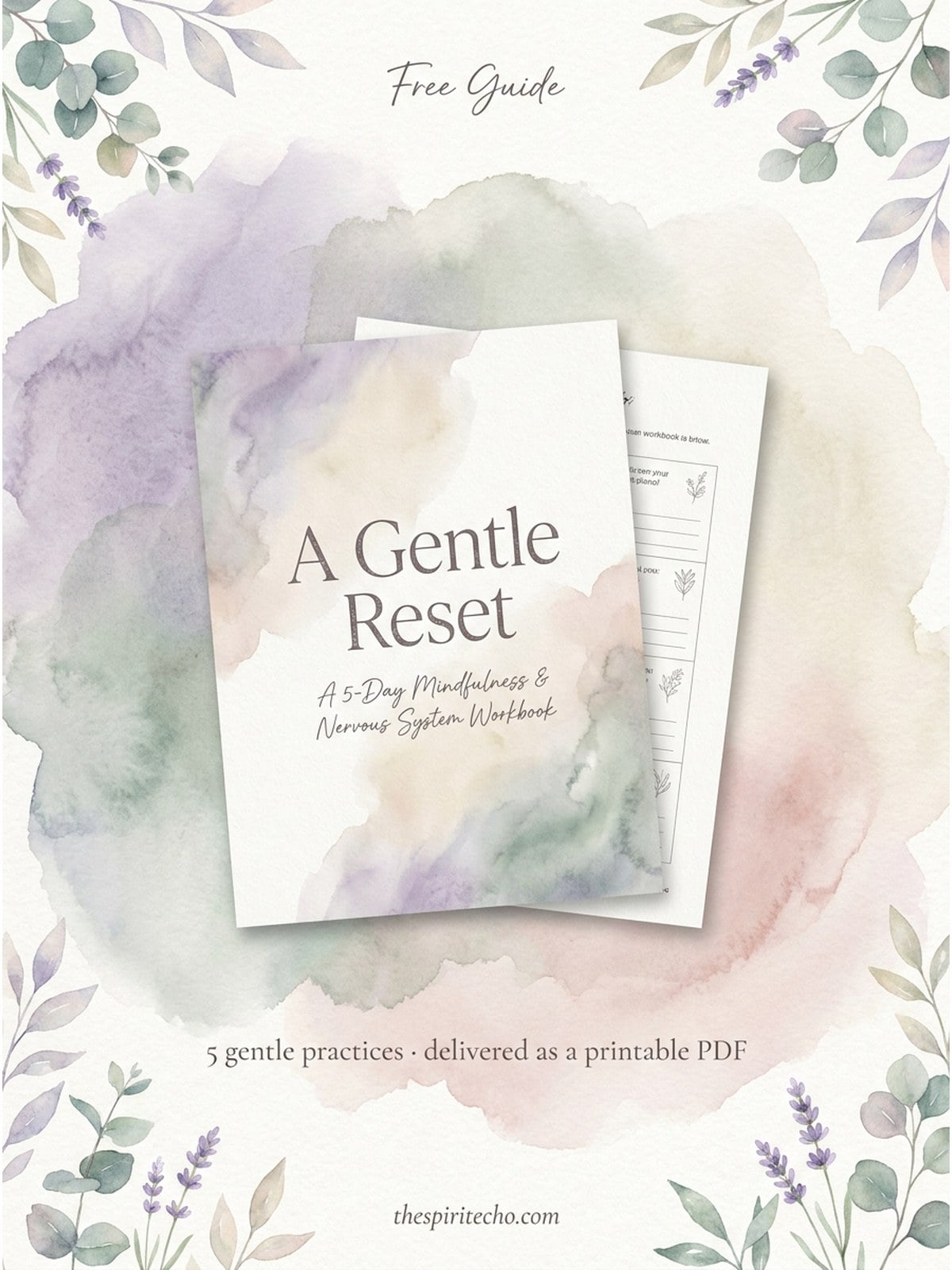
*Download the free A Gentle Reset printable workbook at the end of this post — a 5-day companion designed specifically for people learning how to your regulate their nervous systems.*
What nervous system regulation actually means

Your nervous system is the messenger service between your brain and your body. It’s the thing deciding, in the background, whether you’re safe or in danger — and it tunes your heart rate, breathing, digestion, sleep, and mood accordingly.
Regulation is when your nervous system can move smoothly between states — alert when you need to focus, calm when you need to rest, connected when you’re with people, quiet when you’re alone. A regulated system comes back down after stress.
Dysregulation is when your system gets stuck — usually stuck on alert. You might notice it as shoulders that won’t drop, a racing mind even when you’re tired, shallow sleep, an inability to relax even on a day off. It’s not a personality flaw. It’s your body doing exactly what it learned to do to keep you safe. It just forgot how to come back.
The practice of regulation is teaching it how to come back. Gently. Without force.
Why this matters (more than you might think)
A dysregulated nervous system isn’t just about anxiety. Over time, it shapes almost everything:
- How well you sleep
- How easily you digest food
- How irritable you feel for “no reason”
- How often you get colds or feel inflamed
- How present you can be with the people you love
- How connected you feel to yourself
You can’t think your way out of it. The logical brain doesn’t speak the nervous system’s language. What regulation responds to is body-based signals of safety — breath, touch, slow movement, warmth, rhythm, the feeling of your feet on the ground.
This is why journalling about anxiety sometimes helps and sometimes doesn’t. Why meditation can feel impossible when you’re most wound up. The intervention has to meet the system where it is — and when it’s in overdrive, the system isn’t ready for stillness yet. It’s ready for a slow exhale.
How to use this guide
Pick one practice. Try it for three days. Notice what shifts.
You don’t need to do all of them. You don’t need a whole routine. One small, repeated practice over time will do more for your nervous system than a complicated protocol you can’t stick to.
And please — if what you’re feeling is severe or persistent, these practices work best alongside support from a therapist or doctor, not instead of one. Regulation is a skill you can build, but some kinds of distress need more than a breathing exercise.
15 gentle nervous system regulation practices

1. The long exhale
The fastest, most research-backed way to signal “safe” to your nervous system: make your exhale longer than your inhale. Inhale for 4, exhale for 6 or 8. Three rounds is enough. Your vagus nerve responds almost immediately.
2. Box breathing
Inhale 4, hold 4, exhale 4, hold 4. Repeat for three rounds. Used by everyone from Navy SEALs to therapists because it works without needing you to feel calm first.
3. Humming or sighing
Low-frequency vibration through your throat stimulates the vagus nerve. Humming a single note for a few breaths, or letting out an audible sigh, directly tells your system it’s safe to downregulate.
4. Cold water on your face
Splashing cold water on your face — especially around your eyes and cheeks — triggers the mammalian dive reflex. It slows your heart rate within seconds. Good for acute anxiety or the 3am spiral.
5. Feet on the floor (and notice)
Press both feet into the ground. Notice the weight. Notice the temperature. Notice where the floor meets the soles of your feet. This is body-based grounding and it works even when your mind won’t quiet.
6. Hand on heart, hand on belly
One hand on your chest, one on your belly. Feel the warmth of your palms. Feel your breath move underneath them. This small physical anchor signals safety to your nervous system faster than any mental reassurance.
7. The 5-4-3-2-1 senses exercise
5 things you see, 4 you can touch, 3 you can hear, 2 you can smell, 1 you can taste. A full-body grounding practice in about two minutes. Works especially well for anxiety or dissociation.
8. Slow rocking
Left and right, gently, for two or three minutes. Rock in a chair. Sway while standing. Rock a baby (the soothing works both ways). Bilateral, rhythmic movement is deeply regulating — it’s part of why walking feels good.
9. A warm drink held in both hands
Temperature through your palms + the rhythm of sipping + the gentle focus on one object = a remarkably effective combination. Works better if you put the phone down.
10. Eye movement (visual orienting)
Slowly turn your head and let your eyes scan the room. Let them rest on whatever catches their attention. This one practice, used in somatic experiencing, tells your system “I’m in a safe place, not in danger, I can look around.” It’s quietly powerful.
11. Light pressure or weight
A heavy blanket. A firm hug. Crossing your arms and giving yourself a gentle squeeze. Deep pressure activates the parasympathetic nervous system. Your body interprets it as safety.
12. Slow, steady walking
Not for fitness. Just walking, at a pace that feels almost too slow. Twenty minutes of this does more for a dysregulated system than most things you can do sitting still. If you can walk in nature, even better.
13. Vocal toning or singing
Make sound. Hum, sing in the shower, tone a vowel (“ahhhh”) for a few breaths. It vibrates through your vagus nerve and directly signals calm. You don’t have to be good at it.
14. Orientation to the present moment
Say out loud: “It’s [day of the week]. I’m in [room/city]. It’s [year]. I’m safe in this moment.” Your nervous system doesn’t always know what year it is — especially if old memories are getting activated. Telling it directly helps.
15. Rest without doing
Lie down for twenty minutes. Eyes open or closed. Not for sleep, not as a “break” from productivity. Just to let your system know that rest is allowed, here, now. This alone, repeated daily, can reset months of bracing.
When regulation feels hard
Sometimes these practices don’t do what you hoped. You try the long exhale and your chest still feels tight. You try the body scan and the tension gets louder, not quieter.
That’s not failure. That’s often what regulation looks like at the beginning.
A nervous system that’s been in overdrive for a long time has to learn, slowly, that slowing down is safe. In the early weeks of this work, you might feel more aware of tension, more aware of tiredness, more emotional than usual. This is your system starting to trust that it’s allowed to feel things.
Stay gentle with yourself. If a practice isn’t landing, try a different one. If none are landing on a particular day, starting a gentle journaling practice alongside the body work sometimes opens up what the body couldn’t access alone.
If there’s resistance — read this

You might notice some part of you wants to skim through this list and not actually try anything. “I’ll come back to it later.” “I don’t have time today.” “These are too simple to do anything.”
That’s normal. A nervous system in overdrive often doesn’t want to slow down — slowing down feels unsafe when you’ve been running on alert for a while. The resistance itself is information.
Start tiny. A single long exhale, once a day, is enough to begin. You don’t need to overhaul your life. You just need to make a small, repeated gesture of permission — a signal to your body that rest is coming, again and again.
Over weeks, your baseline starts to shift. Not dramatically. Quietly. You’ll find yourself less wound up by things that used to send you over the edge. You’ll notice when your shoulders are up near your ears. You’ll ground yourself without needing to think about it.
That’s regulation. It’s not a destination. It’s a practice you keep returning to.
Get Your Free *A Gentle Reset* Workbook
A 5-day printable workbook designed exactly for this kind of work — gentle, body-based, soft. One practice per day, building from arrival to grounding to softening and return.
What’s inside:
- A soft welcome page
- Day 1 — Arrive (breath + a simple box-breathing guide)
- Day 2 — Ground (the 5-4-3-2-1 senses worksheet)
- Day 3 — Reflect (a single journal prompt with space to write)
- Day 4 — Soften (a gentle body scan guide)
- Day 5 — Return (a closing reflection on what shifted)
Sign up below to get instant access. One welcome email, one printable, no pressure. You can unsubscribe any time.
Frequently asked questions
What is nervous system regulation in simple terms?
Nervous system regulation is the practice of helping your body move smoothly between states of alertness and rest. A regulated nervous system can be on when you need focus and off when you need recovery. Regulation practices — like slow breathing, grounding, gentle movement — teach a system that’s been stuck in overdrive how to come back down.
How long does it take to regulate your nervous system?
You may feel a small shift within minutes of a single regulation practice (like the long exhale). But building a regulated baseline — where you respond calmly to everyday stress — usually takes weeks to months of repeated small practices. Be patient with the process. The nervous system learns slowly because it takes safety seriously.
Can I regulate my nervous system without therapy?
Yes, for many people, daily regulation practices make a meaningful difference on their own. But if you’ve experienced trauma, have chronic anxiety, or feel stuck despite consistent practice, working with a somatic therapist or trauma-informed practitioner alongside these practices is far more effective than either alone.
What are signs of a dysregulated nervous system?
Common signs include: shoulders that won’t drop, a racing mind even when tired, shallow or interrupted sleep, digestive issues, low-grade anxiety, inability to rest, irritability that surprises you, difficulty concentrating, feeling “wired but tired,” and emotional numbness alternating with overwhelm.
What’s the fastest way to calm a dysregulated nervous system?
In the moment, the fastest intervention is usually the long exhale — breathing in for 4 and out for 6-8 for three rounds. Cold water on the face works similarly fast. For longer-term regulation, consistent small daily practices (breath, grounding, slow movement) work better than any one “fix.”
A soft closing
Pick one practice. Do it once a day for a week. Notice what shifts.
That’s it. That’s the beginning.
Your nervous system doesn’t need a new protocol. It doesn’t need you to be perfect about any of this. It just needs small, repeated signals — consistent and gentle — that safety is here, that rest is allowed, that you’re going to keep showing up for it.
Begin where you are. Sit with what’s here. Come back gently, again and again.
Follow along
Find more gentle practices on Pinterest and Instagram.
You might also like
- 20 Gentle Mindfulness Activities for Adults
- How to Ground Yourself When You Feel Overwhelmed
- How to Start a Mindfulness Journal (A Gentle Beginner’s Guide)
- Free Mindfulness Printables Collection
Pin this for later!