Starting a mindfulness journal isn’t about being perfect with words or writing every single day. It’s about creating a small sacred space for your thoughts, emotions, and awareness to gently land. If you’ve been feeling scattered, overwhelmed, disconnected, or simply curious about slowing down, a mindfulness journal can become one of the most powerful tools in your daily life.
In this guide, you’ll learn:
- Exactly how to start a mindfulness journal
- What to write when you don’t know where to begin
- How to stay consistent without pressure
- And how to use a gentle printable template to support your practice
Let’s begin softly.

What Is a Mindfulness Journal?
A mindfulness journal is a simple daily writing practice where you consciously observe your inner world without judgment. Instead of focusing on productivity or “fixing” yourself, mindfulness journaling encourages awareness, presence, and emotional honesty.
It pairs beautifully with other practices like meditation (you may love creating a peaceful corner with a meditation cushion), gentle self-care rituals, and slow living routines.
If you already enjoy creative journaling, this is a beautiful next step deeper into emotional awareness.
The Benefits of Mindfulness Journaling

Mindfulness journaling supports:
- Reduced anxiety and mental overwhelm
- Emotional regulation
- Clarity of thought
- Better sleep
- Increased intuition
- A stronger connection to yourself
It also pairs wonderfully with creative mindfulness activities like DIY mindfulness crafts for adults or gentle reflective practices such as ways to relax the nervous system naturally.
How to Start a Mindfulness Journal (Step-by-Step)
1. Choose Your Journal (Keep It Simple)
Any notebook works. What matters most is that it feels inviting, not intimidating. Lined, blank, digital, physical — all are perfect.
2. Set a Gentle Intention
Instead of saying “I must journal every day,” try:
“I allow myself to gently return to this practice whenever I need it.”
You might also enjoy setting intentions alongside affirmations like those in daily positive affirmations.
3. Pick a Consistent Time (But Stay Flexible)
Morning = clarity
Evening = release
Mid-day = grounding
There is no wrong answer here.
4. Begin With Presence, Not Performance
Before writing, pause. Take three slow breaths. Feel your body. Feel where you are in today’s energy.
What to Write in a Mindfulness Journal
If you ever feel unsure what to write, try starting with these gentle anchors:
- “Right now I feel…”
- “Today my body needs…”
- “One thing I noticed about myself today is…”
- “Something that brought me peace today was…”
- “A thought I’m ready to soften is…”
You can also pair your journaling with introspective practices like healing journaling prompts, intuition and inner wisdom journaling, or reflective seasonal work such as cozy self-care ideas for winter.
How Often Should You Journal?
There is no “right” frequency.
For some, 5 minutes a day feels nourishing.
For others, once a week is more sustainable.
What matters most is kind consistency, not rigid discipline.
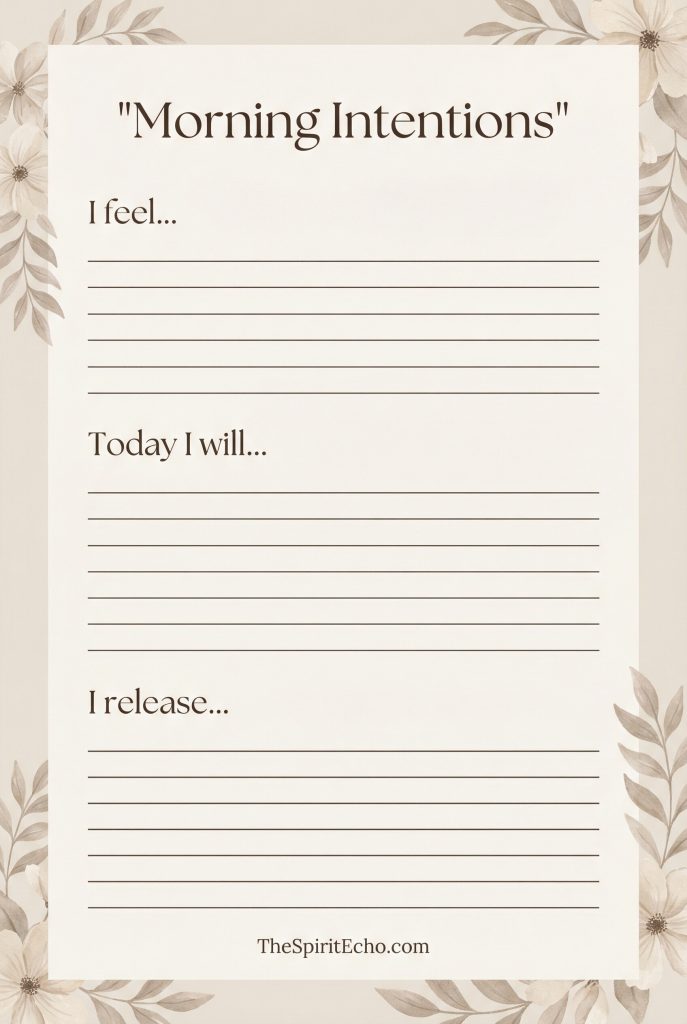
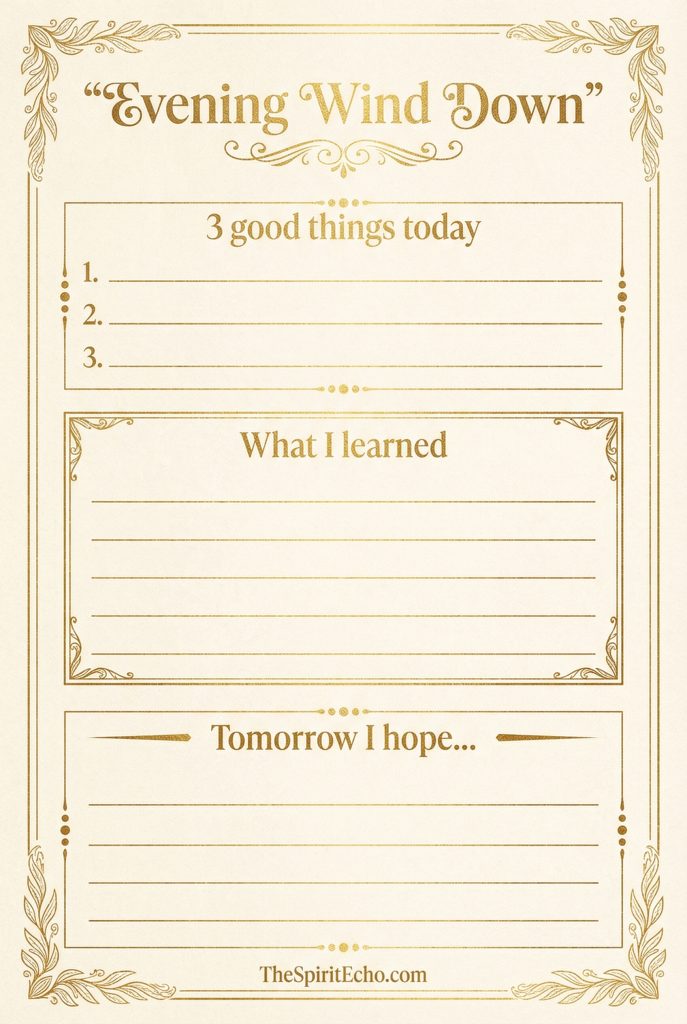
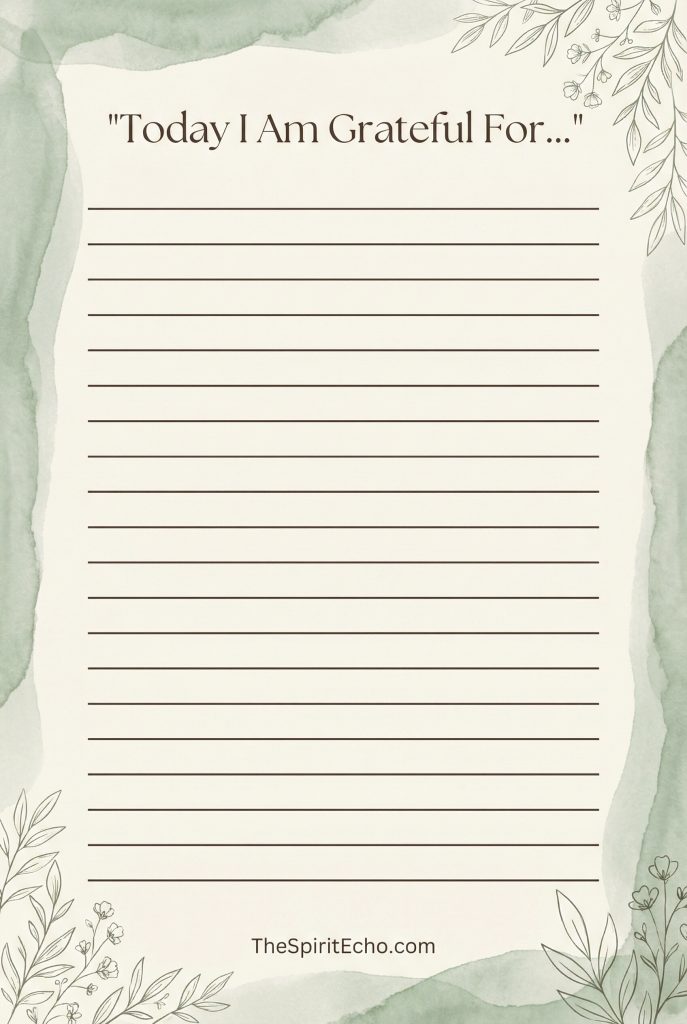
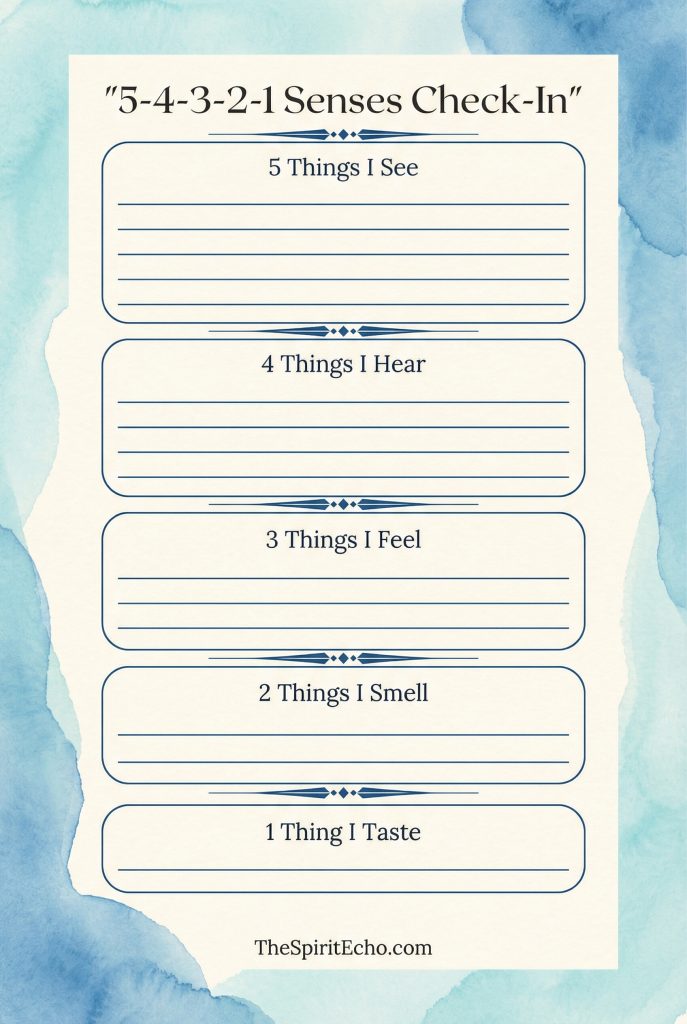
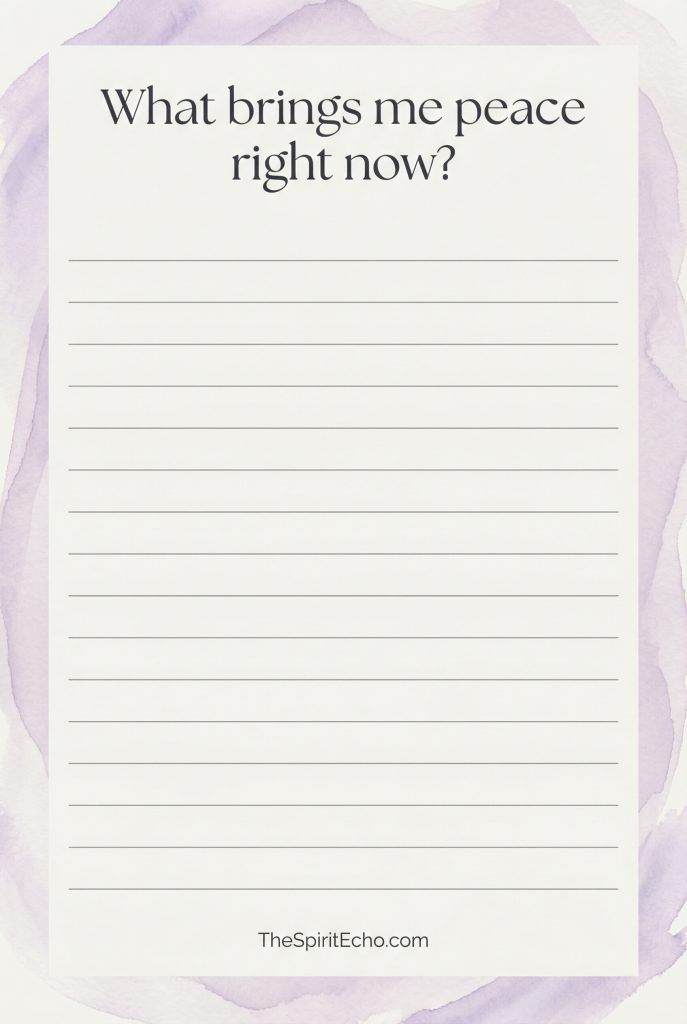
Using a Printable Mindfulness Journal Template (Download the full free PDF at the end of this blog post!)
Printable templates remove the mental effort of “where do I start?” They gently guide your reflection while still leaving space for free expression.
Your starter pack includes:
- A daily mindfulness writing page
- A weekly reflection page
- 30 beautifully guided prompts
- A calming cover page
These are ideal for:
- Busy minds
- Emotional regulation
- Spiritual self-care routines
- Creating your own sacred journaling ritual
How Mindfulness Journaling Supports Spiritual Growth
Mindfulness journaling naturally supports:
- Manifestation practices
- Energy healing awareness
- Divine feminine embodiment
- Spiritual awakening reflection
- Emotional shadow work
It pairs powerfully with other spiritual practices like manifesting, energy healing, and spiritual awakening exploration.
Common Blocks (And How to Gently Move Through Them)
“I don’t know what to write.”
→ Use prompts.
“I missed a few days, so I failed.”
→ There is no failure in mindfulness.
“My thoughts feel messy.”
→ That’s exactly what the journal is for.
You Don’t Have to Do This Alone
Mindfulness is not about becoming someone else. It’s about coming home to who you already are.
Your journal becomes a quiet companion in that remembering.