
Some days you don’t need a new productivity system. You don’t need a cold plunge, a five-hour morning routine, or another app telling you to breathe. You just need one quiet thing you can do — right now, with whatever energy you have left — that brings you back to yourself.
That’s what this list is for.
These are gentle mindfulness activities for adults who feel a little frayed around the edges. No performance, no “right way” to do them. Just soft, practical ways to return to the present moment when your mind has been somewhere else all day.
Download the free A Gentle Reset printable workbook at the end of this post — a 5-day companion for the activities below.
Table of Contents
What mindfulness actually is (in plain language)
Mindfulness is the practice of gently noticing what’s happening right now — in your body, your breath, or your surroundings — without needing to fix or change any of it.
That’s it. There’s no chanting required. You don’t have to sit cross-legged on a cushion for forty minutes. You don’t need to empty your mind — minds aren’t built to go blank.
You just pause, you notice, and you soften into what’s here.
The word gentle matters. A lot of mindfulness content treats the practice like a workout — something to master, measure, get right. But the nervous system doesn’t respond well to pressure. It responds to permission. These activities are designed to give you that.
Why gentle mindfulness activities help
When life feels loud — deadlines, noise, inbox pings, the low hum of worry — your body often stays in a state of quiet alert. You carry tension in your shoulders. You forget to eat lunch. You drift through a whole afternoon without really being in it.

Mindfulness is how you come back.
Even a few minutes of gentle presence can:
- Soften the edges of an anxious day
- Give your nervous system a signal that it’s safe to rest
- Help you notice what you actually need (water, a break, a good cry)
- Create a small pocket of stillness that carries into the rest of your hours
You don’t need to do these activities perfectly to feel the difference. You just need to begin.
How to use this list
Pick one. Just one. Don’t bookmark the whole thing with a plan to try all twenty tomorrow — that’s the old pattern showing up again.
Choose the activity that feels most doable right now. Set a timer for five minutes if that helps, or don’t. Notice how it lands in your body. Then let it go.
Some of these are thirty-second practices. Some take ten minutes. All of them are meant to fit around real life, not replace it.
20 Gentle Mindfulness Activities for Adults
1. The three-breath pause
Before you open your laptop, step out of the car, or walk into a meeting — take three slow breaths. Longer on the exhale than the inhale. That’s the whole practice.
2. Name five things you can see
Slowly. Without rushing to the next one. Notice colour, texture, the way light falls on them. This is a classic grounding exercise and it works because it pulls you out of your head and into the room you’re actually in.
3. Drink a glass of water mindfully
Feel the cool of the glass. Notice the temperature as you swallow. No phone, no screen. Just one glass of water with your full attention.
4. Feel your feet on the floor
Right now, if you can. Notice where they meet the ground. Press down gently through the soles. Return to this whenever your mind starts to spiral.
5. Five-minute sky gaze
Step outside or look out a window. Watch the sky for five minutes. Clouds moving, light shifting, a bird passing through. You don’t have to think about anything. Just look.
6. Soft body scan
Start at the top of your head and slowly move your attention down through your body. Notice where you’re holding tension. You don’t have to release it — just noticing is enough.
7. One mindful sip of tea
The first sip of a warm drink, fully attended to. Steam, warmth, the flavour spreading across your tongue. This is a whole practice hiding inside a daily habit.
8. Name what you’re feeling
Out loud or in your head: “I’m feeling tired. I’m feeling a bit anxious. I’m feeling okay, actually.” Naming emotions takes the edge off them. Your brain stops trying so hard to figure out what’s wrong.
9. Put your hand on your heart
Literally. Feel the warmth of your palm on your chest. Feel your heart beating underneath. This small gesture signals safety to your nervous system in a way that nothing else quite does.
10. A slow walk to nowhere
Not for fitness, not for a destination. Just walking — around the block, through your garden, down your hallway — with your attention on each step. Slow enough that you can feel the movement.
11. Pay attention to water
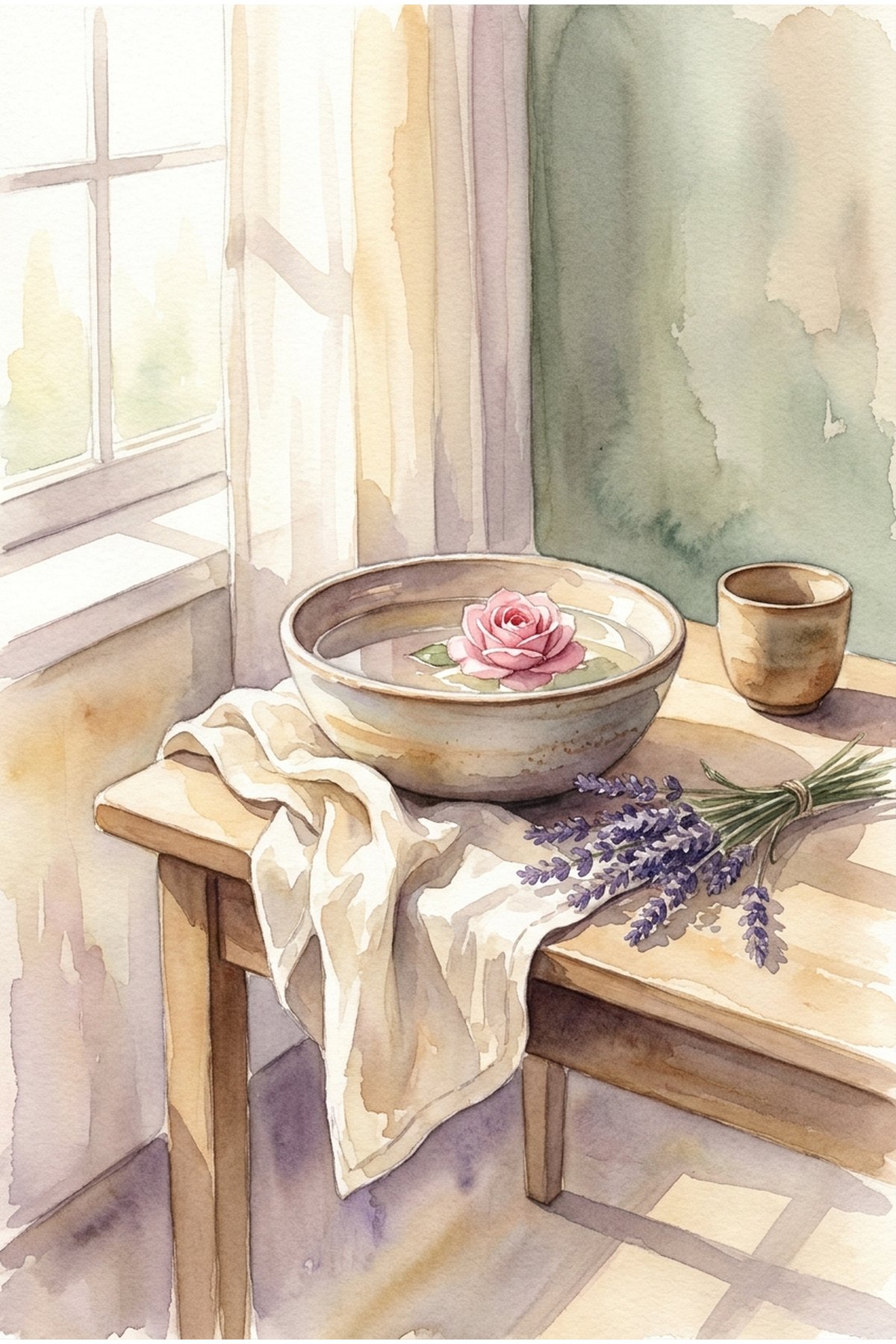
Washing your hands, doing the dishes, taking a shower. Let water be the whole practice. The temperature, the sound, the way it moves over skin. Water is an easy teacher.
12. Breathe into your lower belly
Place one hand on your chest, one on your belly. Try to breathe so that only the lower hand moves. This slows everything down. Five rounds is enough.
13. One sentence journal
Open a notebook. Write one sentence about how today felt. That’s all. If you want to start a gentle journaling practice, this is where it begins.
14. The 5-4-3-2-1 senses exercise
Name five things you see, four you can touch, three you hear, two you smell, one you can taste. A full-body grounding practice in about two minutes.
15. Mindful stretch
Stretch one part of your body that feels tight. Neck, shoulders, hips. Move slowly enough that you can feel the whole motion. Don’t aim for a pose — aim for presence.
16. Listen to one song, eyes closed
Just one. No scrolling, no tasks. Let the whole song happen to you. Notice where you feel it in your body.
17. Count backward from one hundred by sevens
A gentle brain-on-something-else activity. Not calming in an obvious way, but it interrupts spiralling thoughts by giving the mind something neutral to do.
18. Sit by a window for ten minutes
No agenda. Watch what happens outside. Rain, leaves, a cat walking along a wall. A small permission to not be useful for a while.
19. Say thank you to your body
For something specific. Thank you, lungs, for doing that all day without being asked. This is the quietest form of self-kindness, and it changes the relationship over time.
20. Rest without guilt for twenty minutes
Lie down. Eyes closed or open. Not to sleep, not to be productive about resting — just to stop, briefly. Set a timer if you need permission.
When mindfulness feels hard (an honest note)
Sometimes these activities don’t do what you hoped. You try the three-breath pause and your chest still feels tight. You do the body scan and notice everything is tense and then you feel worse about it.
That’s allowed. Mindfulness doesn’t always make you feel peaceful. Sometimes it just makes you more aware of what’s actually there — which, on a hard day, is a lot.
If you have a nervous system that’s been in quiet overdrive for months (or years), presence can feel foreign at first. Your body has to learn that it’s safe to slow down. That learning takes time.
Be kind to yourself in the meantime. If a practice isn’t landing, try a different one. If none of them are landing, that’s information too — maybe today is a day for a friend, a walk, a good meal. Mindfulness doesn’t have to be the answer to everything.
If there is resistance — read this
You might notice some part of you wants to skip all of this. “I don’t have time.” “This won’t work for me.” “I’ve tried mindfulness before and it didn’t stick.”
All of that is normal.
Most of us were not taught how to be in the present moment — we were taught how to plan, produce, and stay on task. A practice that asks you to simply notice can feel suspiciously unproductive at first. That’s not you failing. That’s a conditioning your system is working against.
Start small. A single three-breath pause, once a day, is enough to begin. You don’t have to overhaul your life to let more presence into it. You just have to make a small opening.
Over time, these tiny returns to the present add up. Not in a dramatic way — in a quiet one. You’ll find yourself pausing more often without trying. You’ll notice when your shoulders have crept up to your ears. You’ll ground yourself without needing to think about it.
That’s the whole practice, actually. Just coming back. Again and again.
Get Your Free A Gentle Reset Workbook
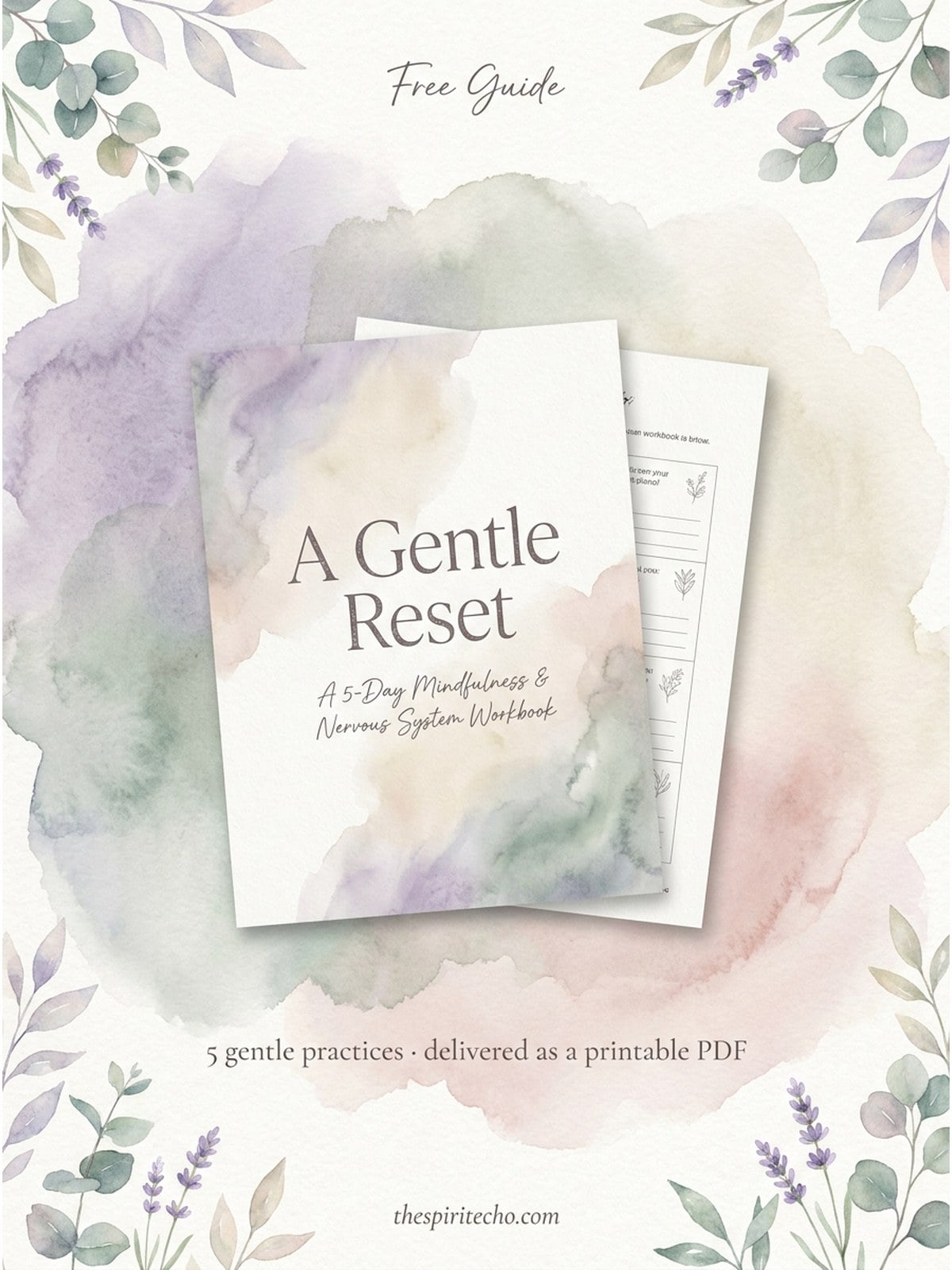
A 5-day printable workbook to companion the activities above. One gentle practice per day: breath, grounding, a journal prompt, a body pause, and a reflection. Designed to be printed, kept on your desk or bedside table, and returned to when you need it.
What’s inside:
- A soft welcome page
- Day 1 — Arrive (breath + a simple box-breathing guide)
- Day 2 — Ground (the 5-4-3-2-1 senses worksheet)
- Day 3 — Reflect (a single journal prompt with space to write)
- Day 4 — Soften (a gentle body scan guide)
- Day 5 — Return (a closing reflection on what shifted)
Sign up below to get instant access. One welcome email, one printable, no pressure. You can unsubscribe any time.
Frequently asked questions
What counts as a mindfulness activity for adults?
Any practice that brings your attention gently to the present moment — your breath, your body, your surroundings, or a simple task. Mindfulness activities don’t have to look like meditation. Washing dishes slowly, walking without headphones, or feeling your feet on the floor all count.
How long do I need to do mindfulness each day?
Even three minutes a day makes a difference. You don’t need a formal practice to begin. Small, repeated returns to the present (three breaths before a meeting, a mindful sip of tea, feeling your feet on the ground) compound over time and are often more sustainable than a single long session.
What’s the easiest mindfulness activity for beginners?
Feeling your feet on the floor is probably the most beginner-friendly. You can do it anywhere, in any clothing, without anyone noticing. Just pause, press down through the soles of your feet, and notice the ground holding you up. That’s a complete mindfulness practice.
Can mindfulness activities help with anxiety?
Yes — gentle, body-based mindfulness activities (like the body scan, breath work, or grounding exercises from this list) can help calm an overactive nervous system. They work because they give your body a clear signal that it’s safe to slow down. If anxiety is severe or persistent, mindfulness works best alongside support from a therapist or doctor, not instead of it.
Do I need special equipment or an app?
No. Everything on this list uses things you already have — your breath, your body, a glass of water, a window. Apps can be lovely, but they can also become another screen to tend to. The free printable workbook linked above is designed to work offline, on paper.
A soft closing
Pick one activity. Try it once, without expectation. See what happens.
You don’t need to become a meditator. You don’t need to schedule mindfulness alongside everything else you’re already carrying. You just need small, soft returns — little moments where you come back to yourself and notice you’re here.
That’s the whole thing.
Begin where you are. Sit with what’s here. Come back gently, again and again.
Follow along
Find more gentle practices on Pinterest and Instagram.
You might also like
- How to Ground Yourself When You Feel Overwhelmed
- How to Start a Mindfulness Journal (A Gentle Beginner’s Guide)
- Free Mindfulness Printables Collection
- My Original List of Mindfulness Activities for Adults
Pin this for later!
My favorite sister-in-law turned me on to this! I love it!