Intro
A printable, not another project. That’s the whole promise of this page.
If you’ve been collecting self-care ideas for a while but haven’t actually done any of them, the problem isn’t you. The problem is that most self-care content assumes you have the energy to design a whole routine before you begin. This daily self-care checklist printable is the opposite — it gives you the structure already done, so all you have to do is tick the boxes.
You can download the checklist free at the end of this post. There’s no complicated opt-in. One welcome email with the PDF attached. Keep it on your fridge, your bedside table, your journal, wherever it’ll actually catch your eye.
What the daily self-care checklist is
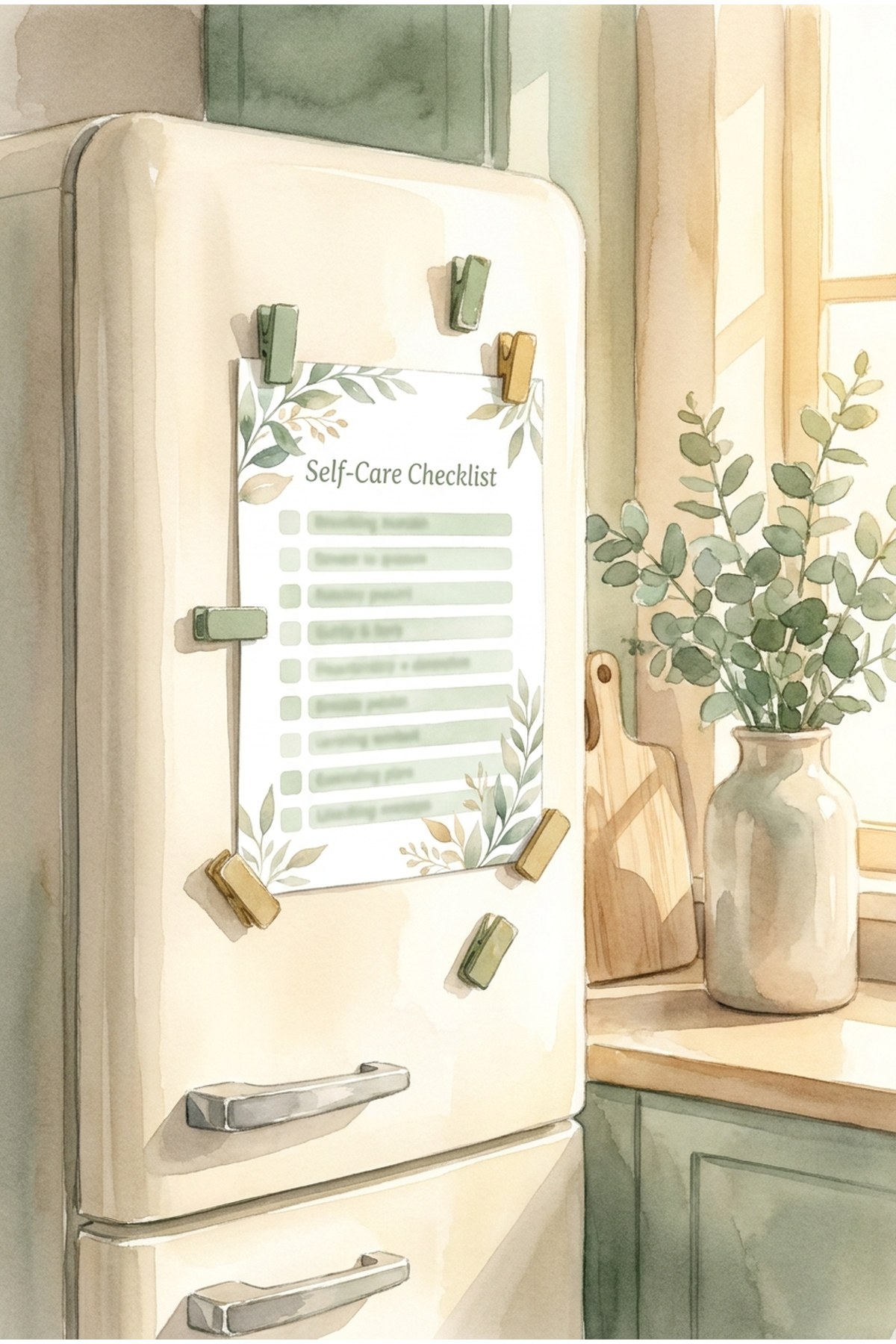
A single printable page with around 15 small daily self-care practices grouped by body, mind, and rest. You print it, tick off what you did that day, and move on with your life.
It’s not a habit tracker (too intense). It’s not a planner (too much writing). It’s just a soft visual reminder that you’re allowed to attend to small things, and a small dopamine hit when you tick a box.
This is genuinely what sustainable self-care looks like for exhausted people — tiny, legible, repeatable, and ticked off without ceremony.
Why a printable works better than an app
Apps ask for your attention. They ping, they track, they compare. A printable doesn’t do any of that. It just sits somewhere in your home, visible, gently reminding you that you have permission to drink the water, take the walk, go to bed on time.
For people who already have too many notifications, a printed sheet is the gentlest intervention possible. You see it. You do one thing on it. You move on. No streak to protect. No data to review. No guilt when you miss a day.
If this sounds too simple to work — that’s the point. Most things that sustain people long-term are simple. The complicated stuff is usually what we abandon by February.
How to use the checklist
Print it. Put it somewhere you’ll see it daily — the fridge, bedside table, bathroom mirror, journal cover.
Each morning (or evening, whatever suits you), glance at it. Tick whatever you already did. That’s it.
Don’t aim for a full sheet. Don’t make it a project. If you ticked three things on a hard day, you took care of yourself. If you only ticked one, you still attended to yourself. The point isn’t completion — it’s attention.
You can also use it as a gentle menu on hard days. Feeling depleted? Glance at the checklist, pick the one thing that feels most possible, do that thing. You’ve just completed a mindfulness practice without calling it one.
What’s on the checklist
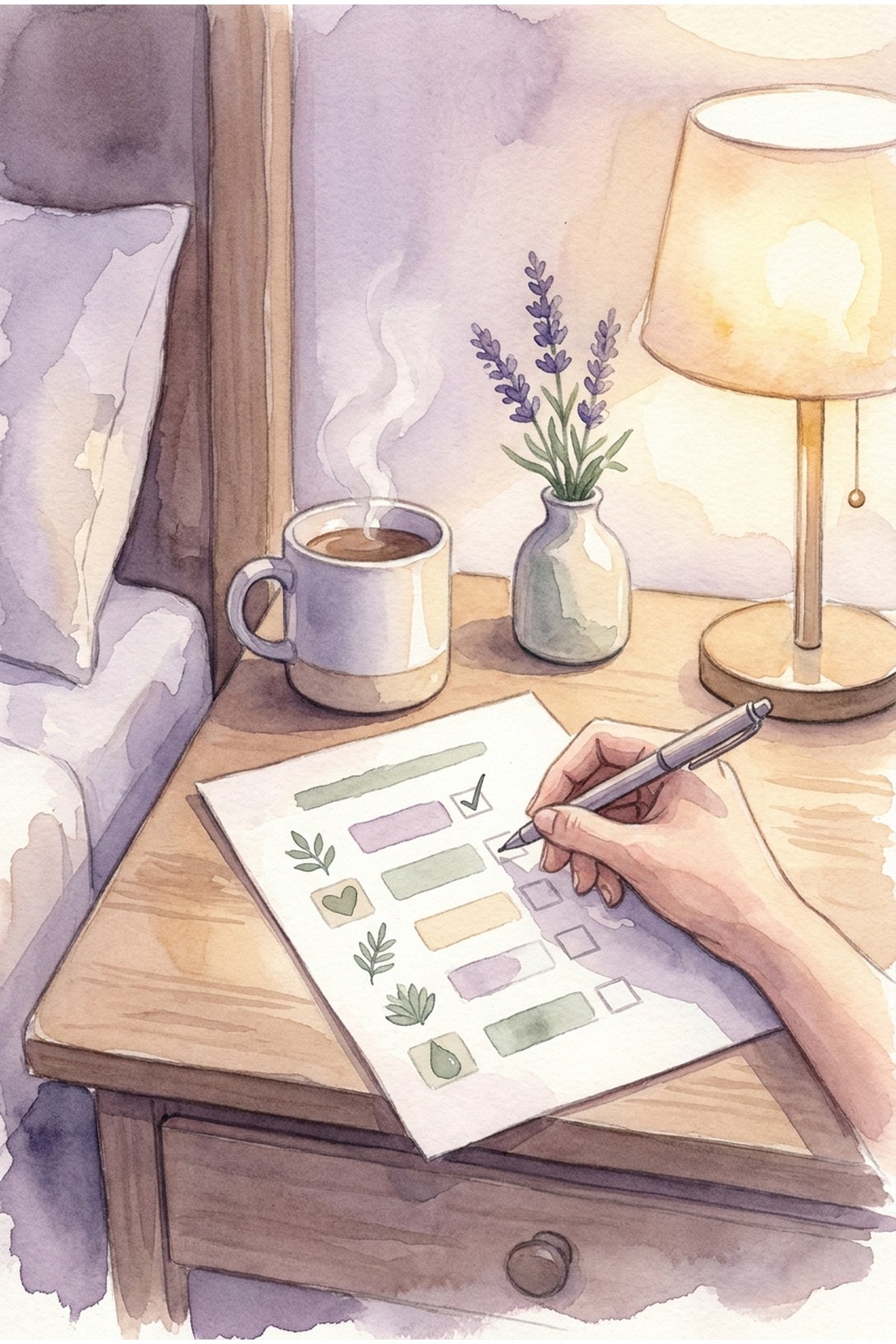
A quick preview of what you’ll get:
🌿 Body
- Drank a full glass of water before caffeine
- Ate at least one proper meal
- Moved my body gently for 5+ minutes
- Spent 2+ minutes outside
- Stood up and stretched during the day
💭 Mind
- Took 3 slow breaths when I noticed tension
- Put my phone down for a meaningful break
- Wrote or spoke one thing I’m feeling
- Said one kind thing to myself
- Noticed one small good thing today
🌙 Rest
- Got into bed before [my own chosen bedtime]
- Screens off at least 15 minutes before sleep
- Did one slow thing (tea, bath, reading)
- Let myself do nothing for a pocket of time
- Said no to something I didn’t want to do
15 items. One page. That’s the whole thing.
When the checklist feels like too much
Some days, even a printable will feel like an expectation. On those days, the checklist has a secret use: read it as a permission slip.
You don’t have to tick anything. Looking at it and thinking “today I can’t do any of this, and I’m allowed to not do any of this” is also a form of self-care. It’s honest. It’s gentle. And tomorrow you can start again.
Self-care isn’t performance. The checklist doesn’t care whether you ticked five things or zero. It just sits there, available, whenever you want to return to it.
If there’s resistance — read this
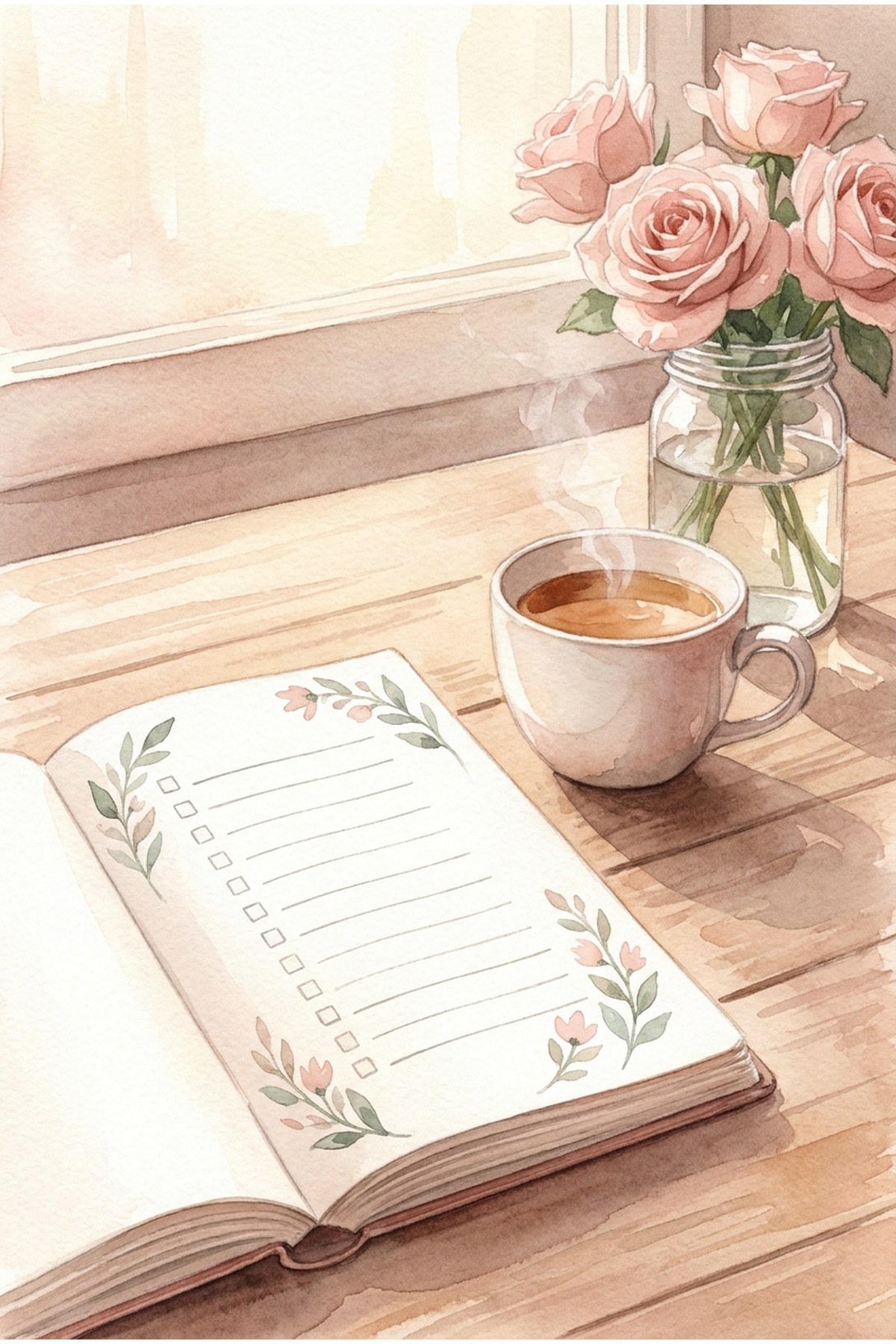
If a printable checklist sounds silly, or if you’ve tried habit trackers before and bounced off them, here’s the difference:
This one isn’t asking you to be consistent. It isn’t asking you to track anything over time. There’s no spreadsheet, no streak, no monthly review. You print a new one each week (or reuse the same one — genuinely doesn’t matter) and tick the boxes that apply. That’s it.
The goal isn’t accountability. The goal is visibility. Putting these small practices in your line of sight makes them much more likely to happen, because the hardest part of self-care — when you’re already depleted — is remembering that the options exist at all.
One sheet of paper. Fifteen small practices. Zero pressure.
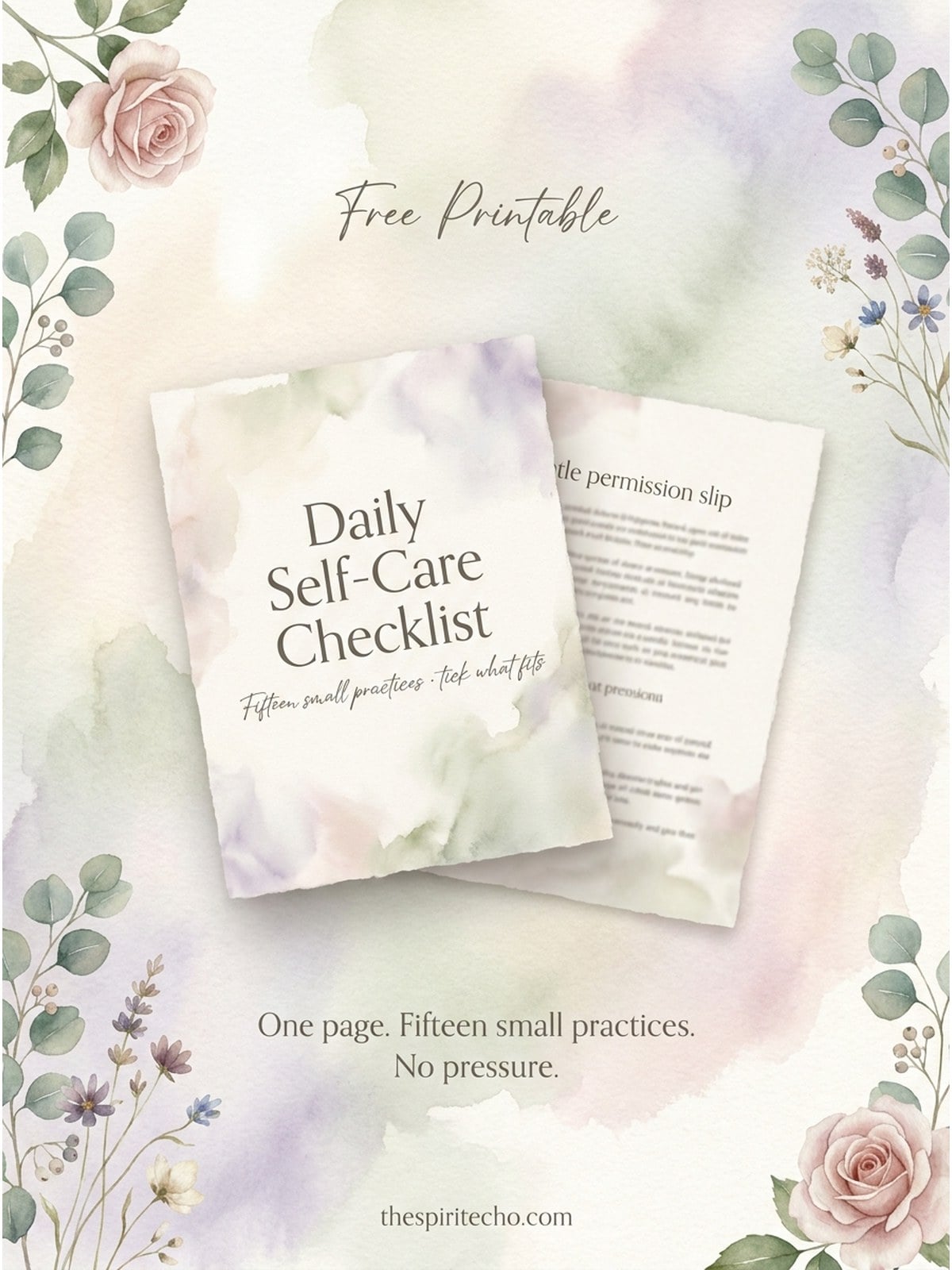
Get Your Free Daily Self-Care Checklist Printable
Download the printable checklist below. One welcome email, one PDF, no drip sequence.
What you’ll get:
- Daily Self-Care Checklist — 1 printable page (body + mind + rest sections, 15 items)
- Bonus: A “Permission Slip” page for the days when you can’t tick anything
Sign up below to get instant access. No pressure, no follow-up emails, just the PDF yours to keep.
Frequently asked questions
Is the self-care checklist really free?
Yes — completely free. You enter your email, you get the PDF in your inbox, you can unsubscribe any time. I use it to share the occasional gentle newsletter, but there’s no obligation and no paid upsell.
Can I print the checklist as many times as I want?
Yes. Print it weekly, laminate it and use a dry-erase marker, or just keep one copy forever and re-use it. Whatever fits your life. The PDF is yours.
What if I don’t want to tick all the boxes?
Perfect — you don’t have to. The checklist works best as a menu, not a requirement. Tick what you did. Ignore the rest. No streak to protect, no data to review.
Is this better than a habit tracker app?
For a lot of people — especially tired ones — yes. Apps add a layer of pressure (streaks, notifications, reviews) that often makes the practice harder to sustain. A printed checklist sits in your home quietly, without demanding anything. It works for people who find tracking apps exhausting.
Who is this checklist for?
Anyone who wants small, gentle structure around daily self-care — especially people who are exhausted, dealing with burnout, or rebuilding after a hard season. It’s designed for low-energy days, not high-performance ones.
A soft closing
Print it. Put it somewhere visible. Tick one thing today.
That’s the whole beginning.
You don’t need a better planner. You don’t need a more elaborate routine. You just need a soft, visible reminder that you’re allowed to be cared for — in small ways, consistently, in the middle of an ordinary week.
Begin where you are. Sit with what’s here. Come back gently, again and again.
Follow along
Find more gentle practices on Pinterest.
You might also like
- 30 Self-Care Routine Ideas for When You’re Exhausted
- 20 Gentle Mindfulness Activities for Adults
- How to Regulate Your Nervous System: A Gentle Beginner’s Guide
- Self-Care Sunday: Rituals for a Slower Week
Pin this for later!