
Everyone feels stressed or overwhelmed sometimes, especially when life moves fast.
It’s not always easy to pause and find a peaceful moment in your busy day.

Learning simple ways to relax can help you feel calmer and more in control, even when things get hectic.
This guide shares easy relaxation tips you can try anytime to bring a sense of peace and balance to your routine.
1) Take a one-minute meditation focusing on your breath
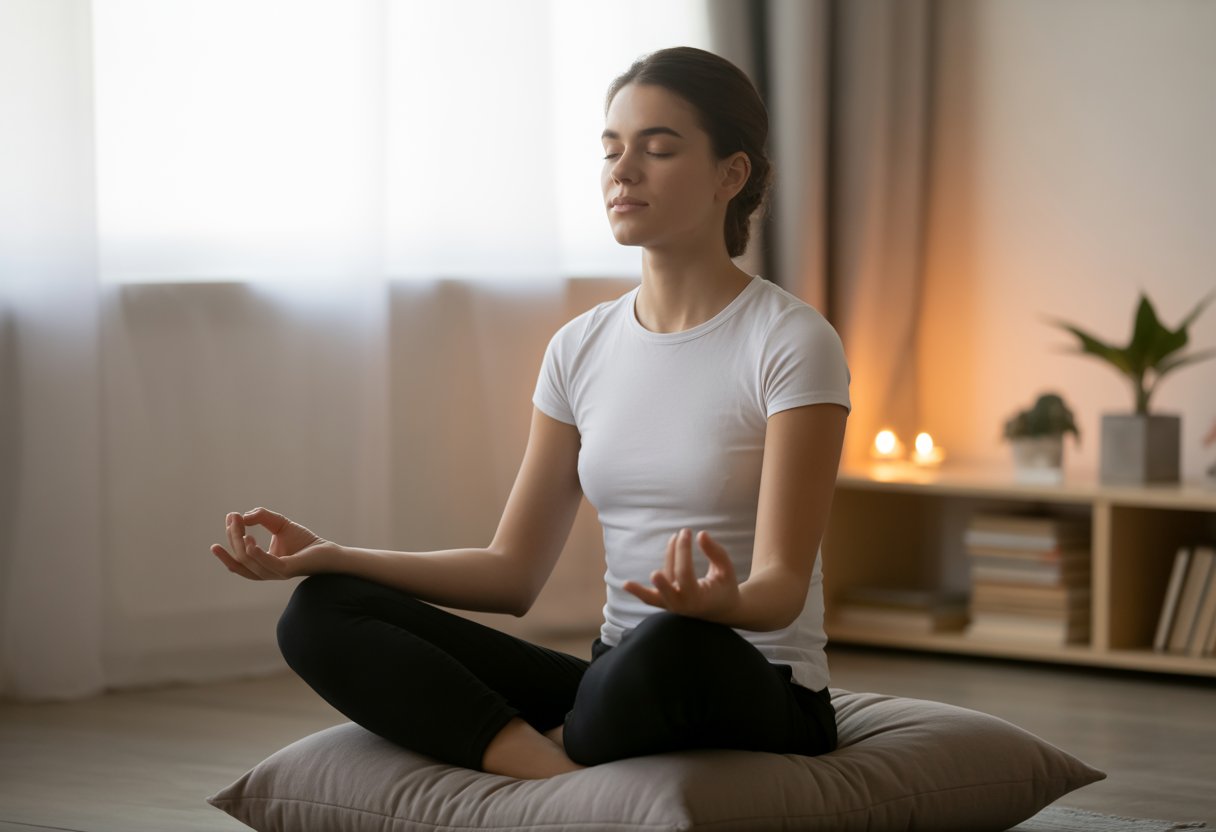
Even if your day is busy, you can still find a moment to pause.
A one-minute meditation is a simple way to bring a little calm into your routine.
You don’t need any special tools or training.
Find a comfortable seat, whether you’re at your desk, in your car, or even outdoors.
Gently close your eyes if it feels okay for you.
Let your hands rest on your lap or at your sides.
Start by taking a slow, deep breath in through your nose.
Notice how the air feels as it enters your body.
As you breathe out, let your shoulders relax.
It helps to focus only on your breath.
If your mind wanders, just bring your attention back to the way your breath moves in and out.
Breath control, even for just one minute, can help settle your thoughts and support a calmer state of mind, as shown in this one-minute meditation guide.
After the minute, open your eyes if they were closed.
Notice how you feel before moving on with your day.
2) Set a timer for 60 seconds and repeat a calming mantra
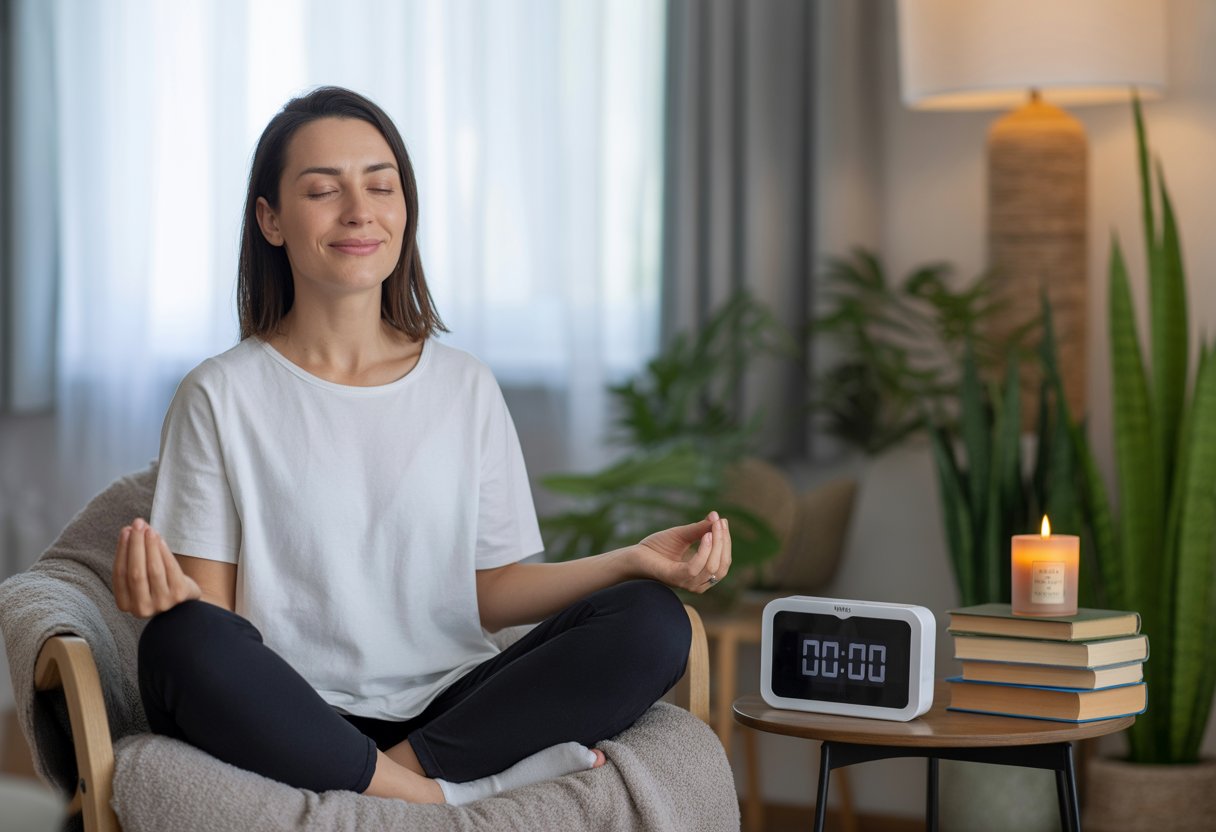
Taking just one minute out of your day can help you slow down and find a little peace.
Set a timer on your phone or use an online meditation timer that lets you choose the exact amount of time you need.
Sit comfortably and close your eyes if you like.
Pick a short, calming phrase or word to repeat quietly in your mind.
It could be something simple like “I am calm” or “peace.”
As you repeat your mantra, gently focus on the words.
Try not to worry if your mind wanders.
Each time you notice your thoughts drift, bring your attention back to your mantra.
Repeating a calming phrase for just 60 seconds can help clear your mind and make you feel more relaxed.
This simple practice is used by many people, including athletes and performers, to feel centered before a big moment.
You can learn more about this one-minute practice from YogaToday.
3) Chew gum to boost mood and reduce stress
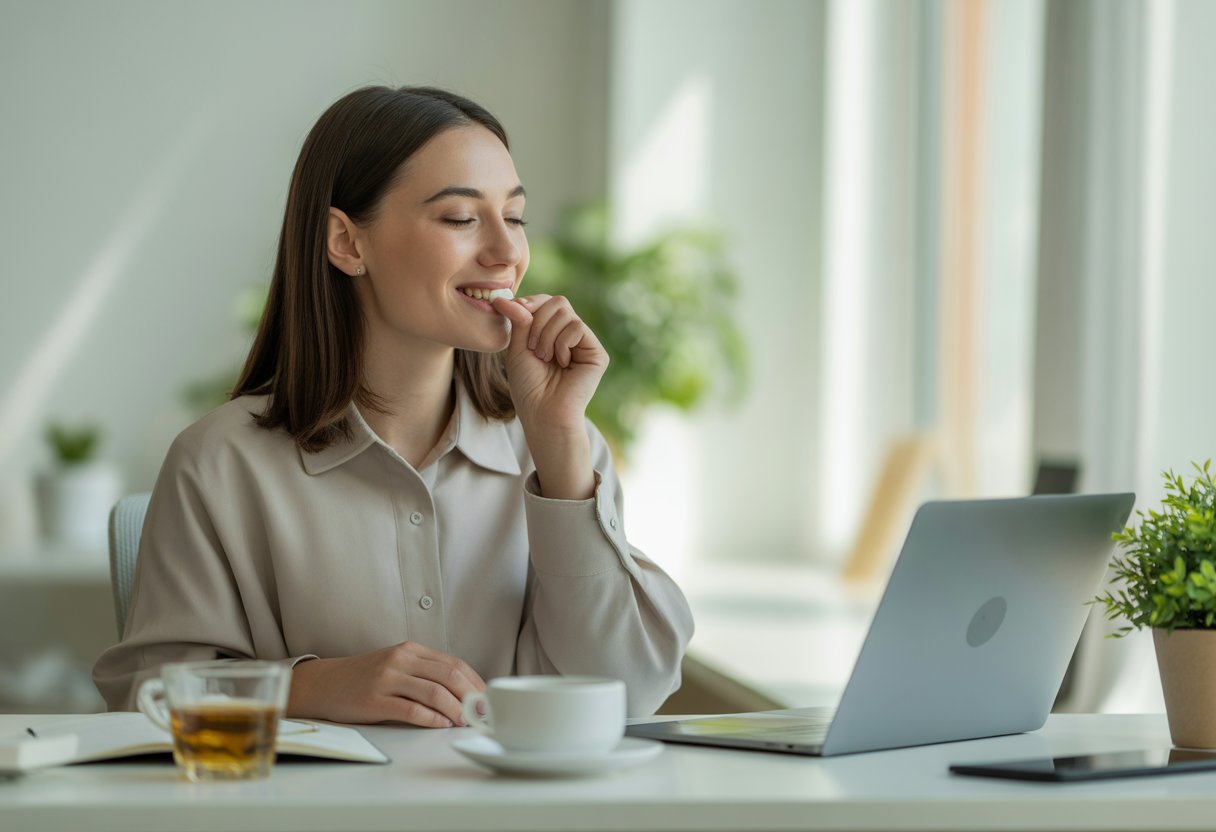
Chewing gum is an easy way to help calm your mind.
It only takes a few seconds to pop a piece in your mouth, and you can do it almost anywhere.
When you chew gum, your jaw muscles are busy, and this physical action may distract you from stress.
Studies say that chewing gum might help lower levels of anxiety and help you feel more relaxed.
Some people notice that chewing gum can help them concentrate too.
It’s not just for fresh breath—gum chewing is linked to better focus and improved mood.
During tense moments at work or school, chew a piece of gum to see if it helps you feel more at ease.
Many people find it helpful during exams or busy days.
If you are looking for a simple way to slow down and relax, give chewing gum a try.
It’s a small habit that could make your day run a little smoother.
4) Stretch your neck and shoulders while seated

If your day gets busy, it’s easy for tension to build in your neck and shoulders.
You don’t need to stand up or have special equipment to ease this tension.
Even a few gentle stretches while sitting at your desk can help relax your muscles.
Start by sitting up tall with your feet flat on the floor.
Slowly tilt your head toward one shoulder, hold for a few seconds, then tilt to the other side.
This simple move can relieve tightness across your neck.
Next, try turning your head to look over your shoulder on each side.
Hold each stretch for a short moment.
Remember not to force any movement or bounce your neck.
For your shoulders, lift them gently toward your ears and then let them drop back down.
Repeat this a few times to help release tension.
You can find more easy and helpful stretches for your neck and shoulders in routines like these recommended exercises.
5) Spend five minutes alone to gather your thoughts
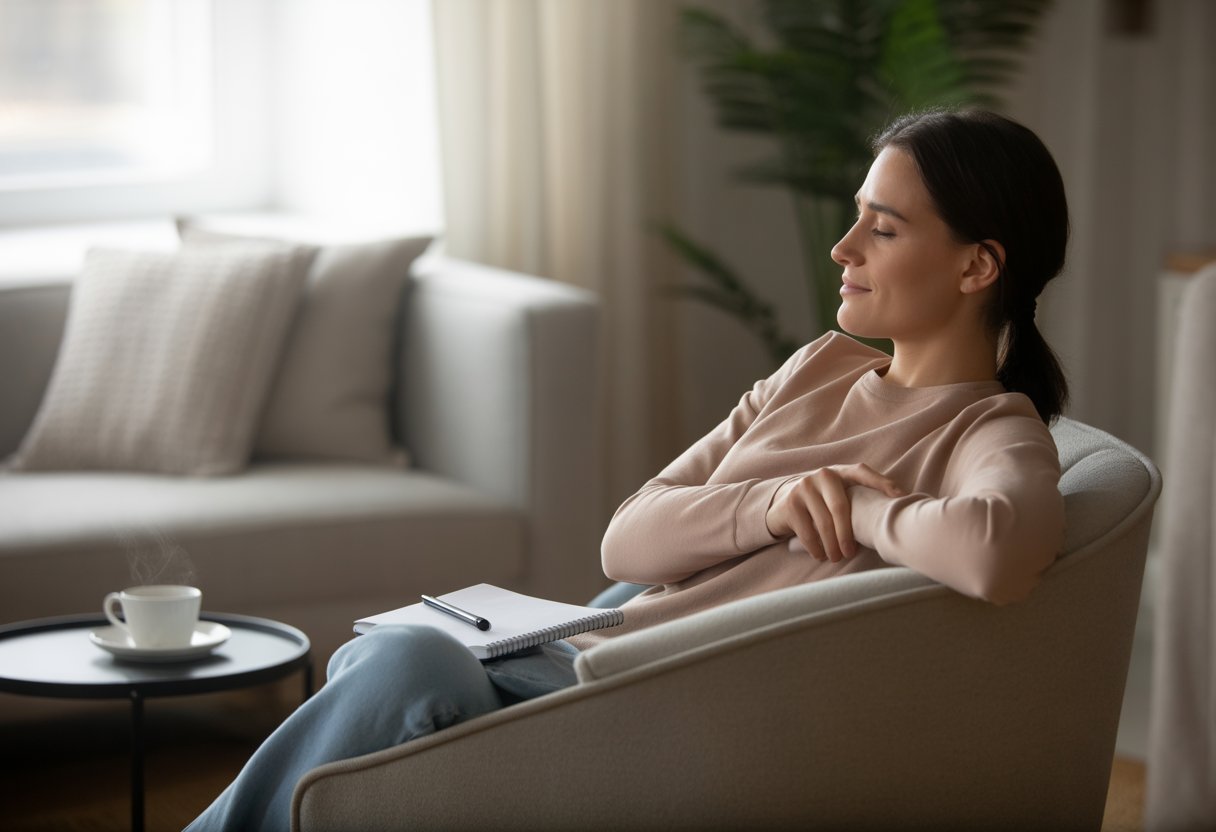
Taking just five minutes by yourself can make a big difference on a busy day.
In a quiet spot, you can slow down, breathe deeply, and let your mind settle.
Alone time lets you step away from loud places or crowded rooms.
It can be as simple as closing a door, sitting in your car, or finding a quiet corner at work or home.
Use these moments to notice how you feel.
You can close your eyes or focus on your breathing for a few minutes.
Many people find that a little bit of alone time helps them feel less stressed and more focused.
According to experts, spending even five minutes alone helps clear your head and gather your thoughts.
Don’t feel guilty about taking these breaks.
Just a short pause by yourself can help you feel calmer and better prepared for the rest of your day.
6) Look outside and notice the scenery
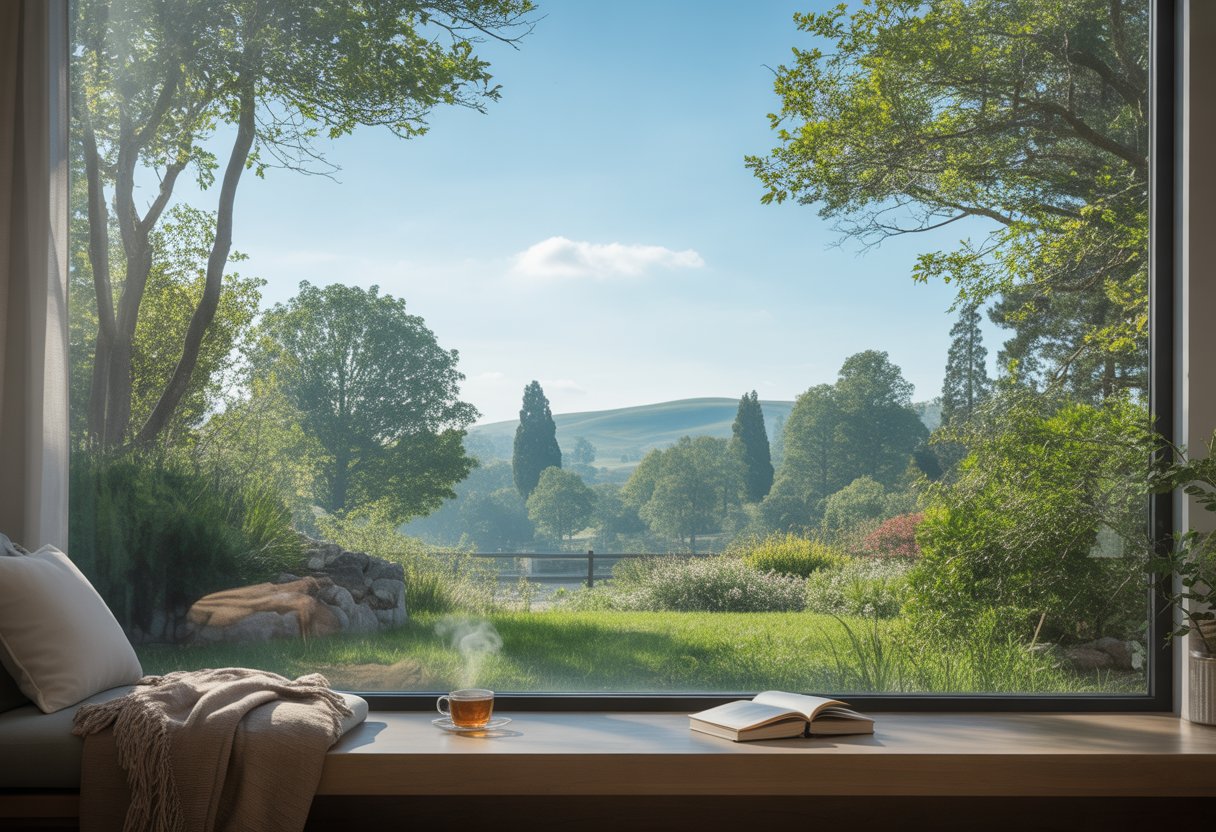
Take a moment to pause and look out your window.
Try to let your eyes rest on the trees, the sky, or even people walking by.
Just watching the world for a bit can help your mind slow down.
You don’t need to go outside to enjoy nature.
Even viewing nature from inside can bring a sense of calm.
Notice the colors, movement, and shapes around you.
Try to spot small details that you would usually miss.
Maybe it’s the way the sunlight hits the leaves or clouds drifting across the sky.
This simple act can make you feel more present.
Research shows that looking at nature, even through a window, can help reduce stress and boost your mood.
For more ideas, you can check out these quick ways to relax.
You can easily fit this habit into your routine.
All it takes is a few quiet minutes to notice what’s outside and let yourself enjoy the view.
7) Practice the 5-4-3-2-1 grounding technique
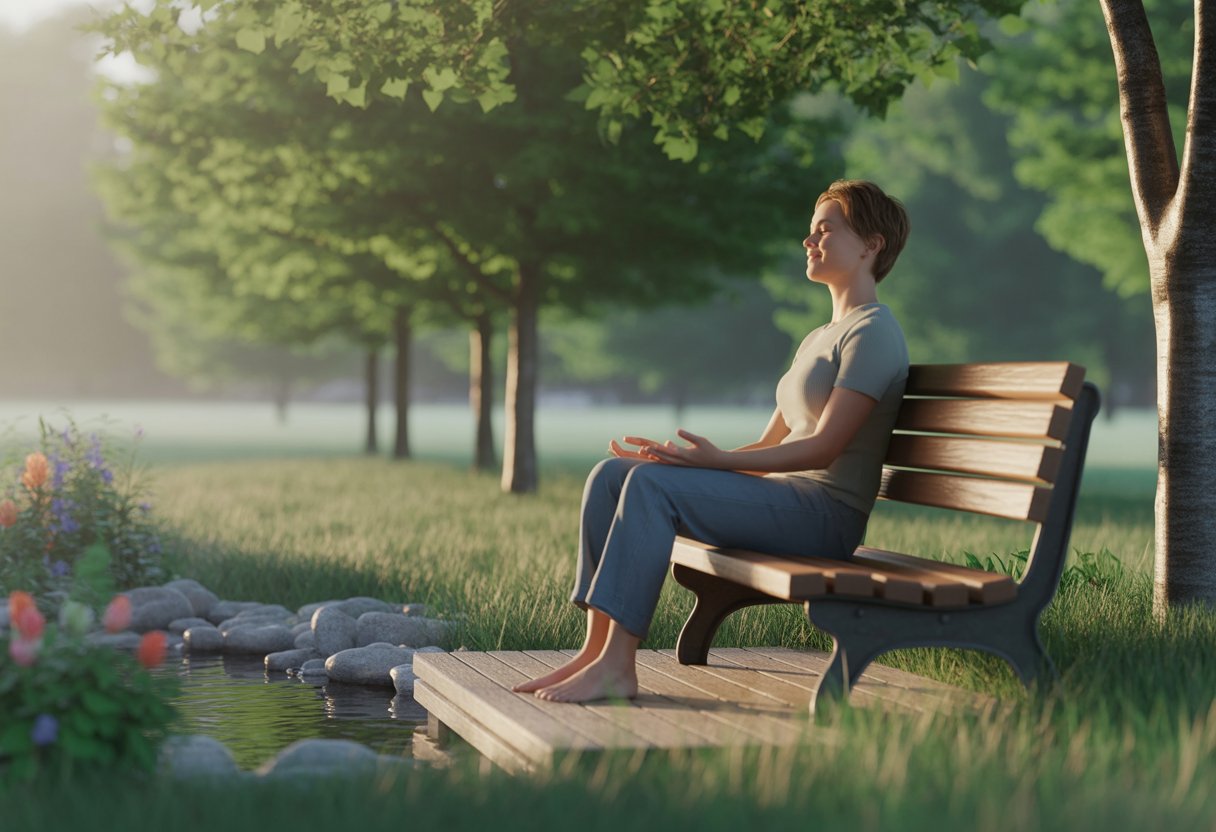
The 5-4-3-2-1 grounding technique is a simple way to help you feel calm and present.
This exercise uses your senses to reconnect you with your surroundings.
Start by noticing five things you can see around you.
It could be anything, like a lamp, a book, or a cloud outside the window.
Next, focus on four things you can physically touch.
This might be the feeling of your chair, your clothes, or the floor beneath your feet.
Then, listen for three different sounds.
Try to notice both loud and quiet noises, such as birds singing or the hum of your computer.
Move on to two things you can smell.
If you can’t smell anything right away, think of scents you like or remember a favorite smell.
Finally, find one thing you can taste.
Maybe you can taste your coffee, a mint, or even just the air in your mouth.
This method can help shift your attention away from stress or anxious thoughts by making you focus on the present moment.
You can learn more about sensory grounding with the 5-4-3-2-1 grounding technique at Verywell Mind: 5-4-3-2-1 Grounding Technique.
8) Check in with your five senses mindfully
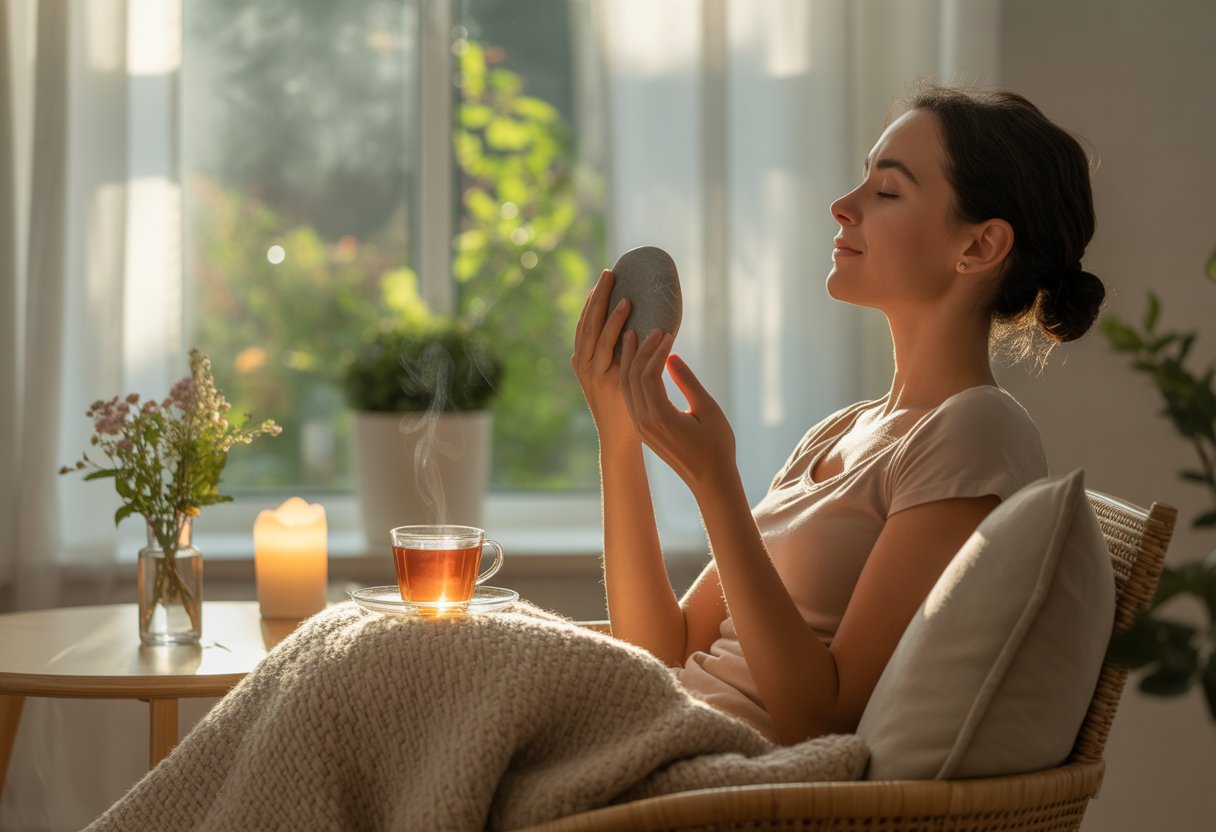
Sometimes it’s hard to slow down during a busy day. A quick way to relax is by noticing what’s happening around you with all five of your senses.
Start by looking around. Name five things you can see, like the color of a chair or the pattern on your desk.
Then try to notice four things you can feel. This could be the chair under you or a breeze from a window.
Next, listen carefully for three different sounds. Maybe you hear birds outside or the hum of your computer.
After that, see if you can smell two things, like a cup of coffee or the scent of soap.
Finally, focus on one thing you can taste. It might be a piece of gum or just the taste left in your mouth.
You can repeat this exercise anytime you need a quick break, whether you’re at home, at work, or even outside.
9) Take deep, slow breaths through your nose
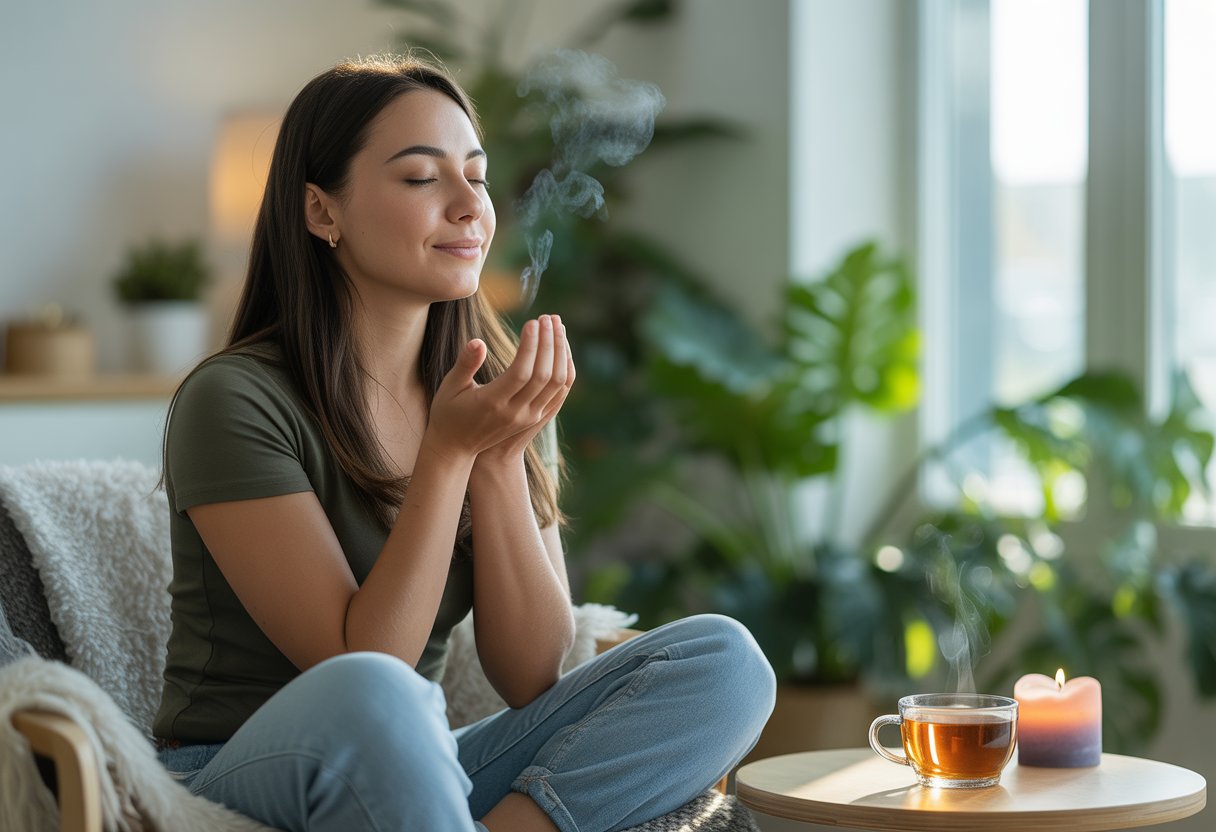
Taking deep, slow breaths through your nose can help your body feel calmer in just a few minutes. Find a comfortable spot to sit or lie down.
Rest your hands on your belly, and let your shoulders relax. Breathe in slowly through your nose for about four seconds.
Feel your belly rise as you fill your lungs with air. Hold your breath for just a second or two.
Next, exhale gently through your nose or mouth. Try to let the out-breath last a little longer than the in-breath.
If it helps, you can count slowly or imagine blowing out a candle. Deep breathing helps lower your heart rate and makes you more relaxed.
Simple breathing exercises like these can also help when you feel stressed or overwhelmed. You can try different breathing techniques whenever you need a quick break.
Try to focus your attention on your breath as you practice. If a thought pops up, just notice it and bring your mind back to the feeling of your breath going in and out.
Even a few rounds can help you feel better.
10) Breathe out gently through your mouth
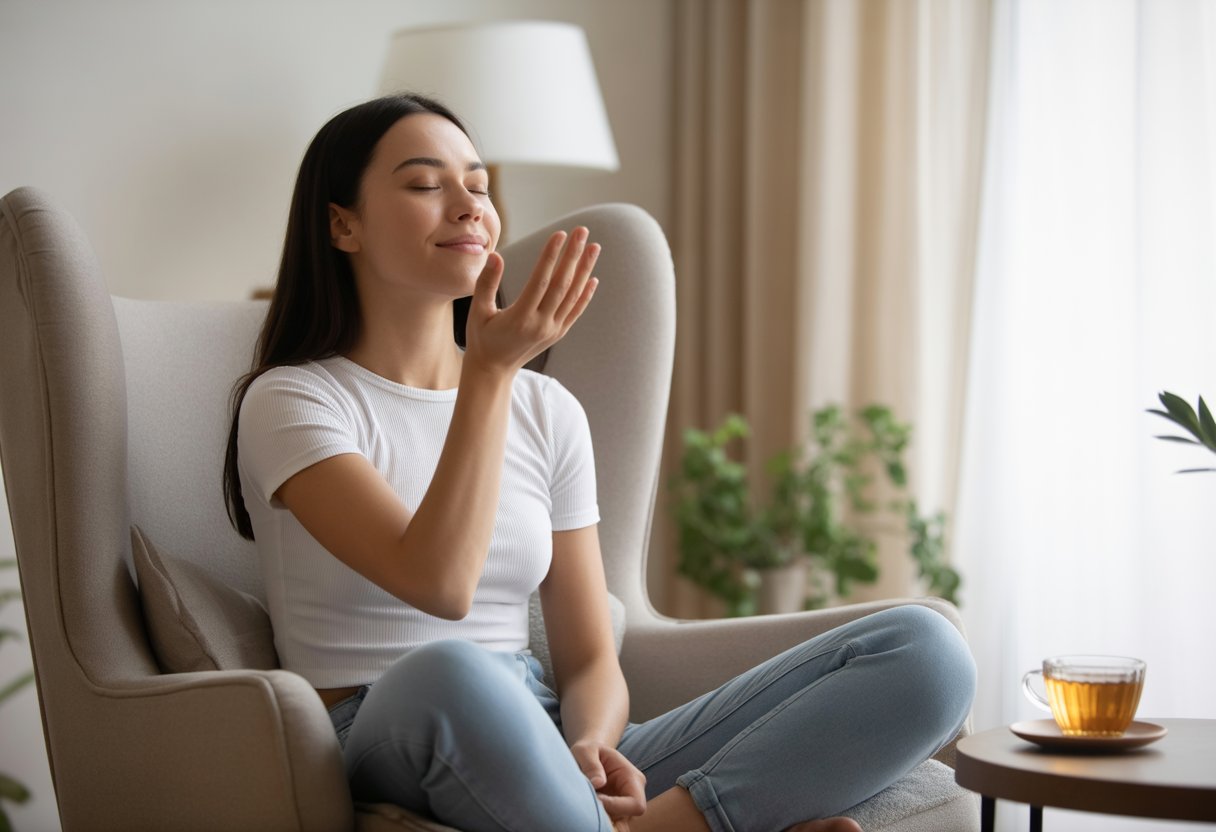
When you feel tense or worried, try breathing out softly through your mouth. This small action can help let go of stress.
It signals your body to relax. Start by breathing in slowly through your nose.
Fill your lungs at a gentle, steady pace. Count to five if it helps.
Now, purse your lips a bit as if you’re blowing out a candle. Slowly release your breath through your mouth.
Let it flow out lightly and smoothly. You can do it while sitting, standing, or even lying down.
If you want more tips, the NHS has a helpful guide for calming breathing. Doing this a few times a day can make a big difference.
11) Go for a short walk outside to clear your mind
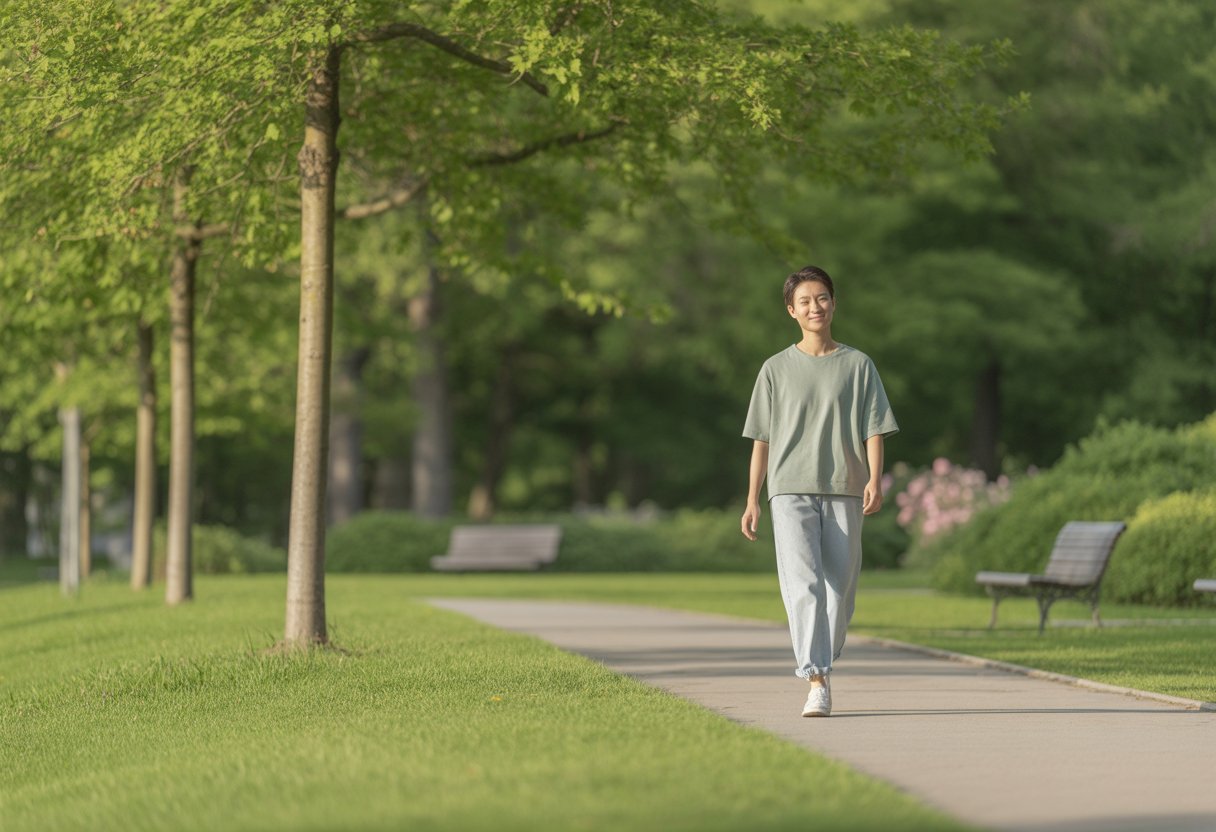
When your day feels overwhelming, a short walk outside can make a difference. Stepping away from your usual space helps your mind get a break from screens and noise.
You don’t need a big plan. Just five or ten minutes around your neighborhood or workplace is enough.
Moving your body can ease stress and give your thoughts a chance to settle. If you can, try to notice what’s around you.
Feel the breeze, listen to the sounds, or take a deep breath of fresh air. Paying attention to your surroundings is a simple way to calm your mind and stay present.
Sunlight can also give you a boost. Spending a little time outside supports your mood and may even raise your energy.
Even a quick walk is an easy way to let go of tension. Whether you walk alone or with someone, it gives both your mind and body a healthy break.
For more ideas, you can see how others use walking to clear their minds and reduce anxiety.
12) Visit an art gallery to relax through culture
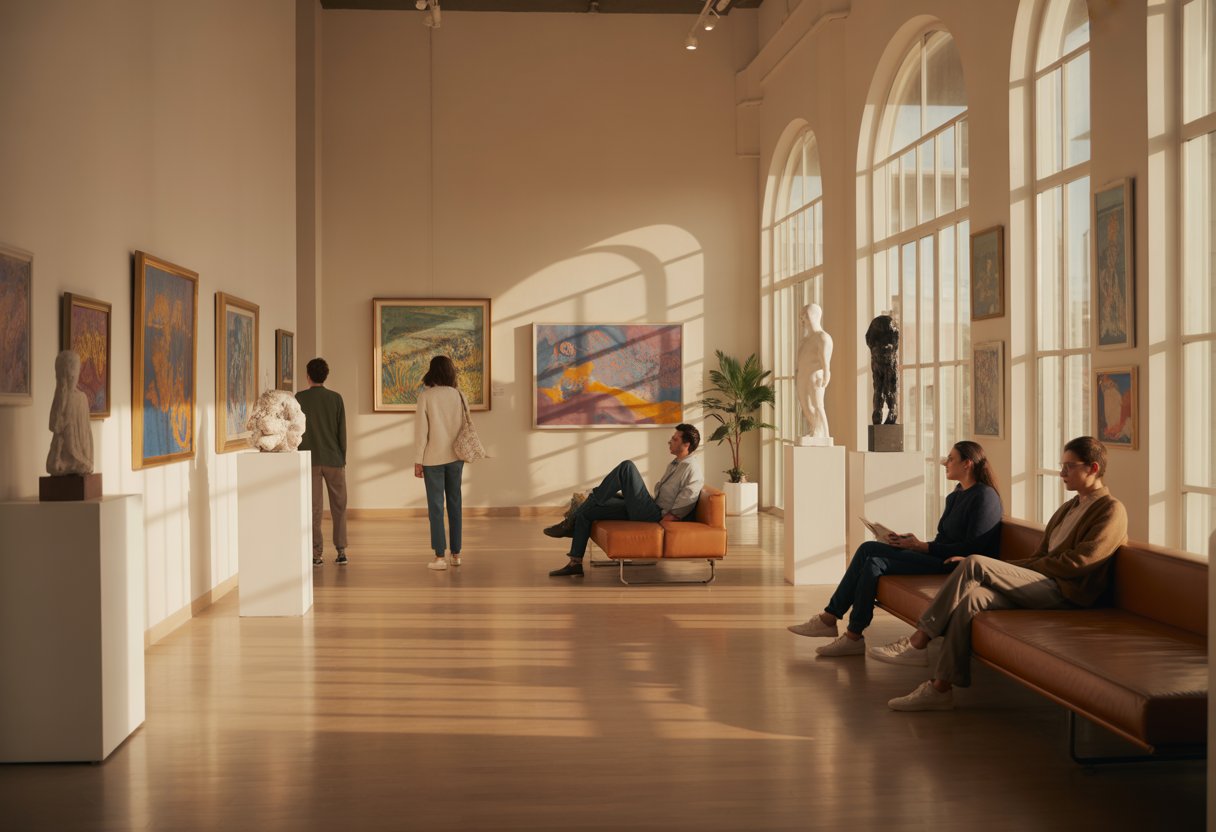
Walking into an art gallery gives you a break from busy days. The calm atmosphere helps you slow down.
You can enjoy the quiet and look at new things. Looking at art can make you feel peaceful.
It takes your mind off stress and lets your eyes focus on color, shape, and texture. You do not need to know much about art to enjoy a visit.
You might find yourself thinking in new ways when you see different styles and subjects. Art can inspire you or simply help you relax in the moment.
For ideas on using art to feel calm, you can browse these calming art activities. Many galleries are free or cost only a little to enter.
You can go alone or invite a friend. Just spending even a short time in an art space can give your mood a gentle lift.
If you feel tired or anxious, a quick gallery visit offers quiet time in a creative place. Try to notice small details, colors, or the way light falls on the paintings.
13) Explore a museum for peaceful reflection
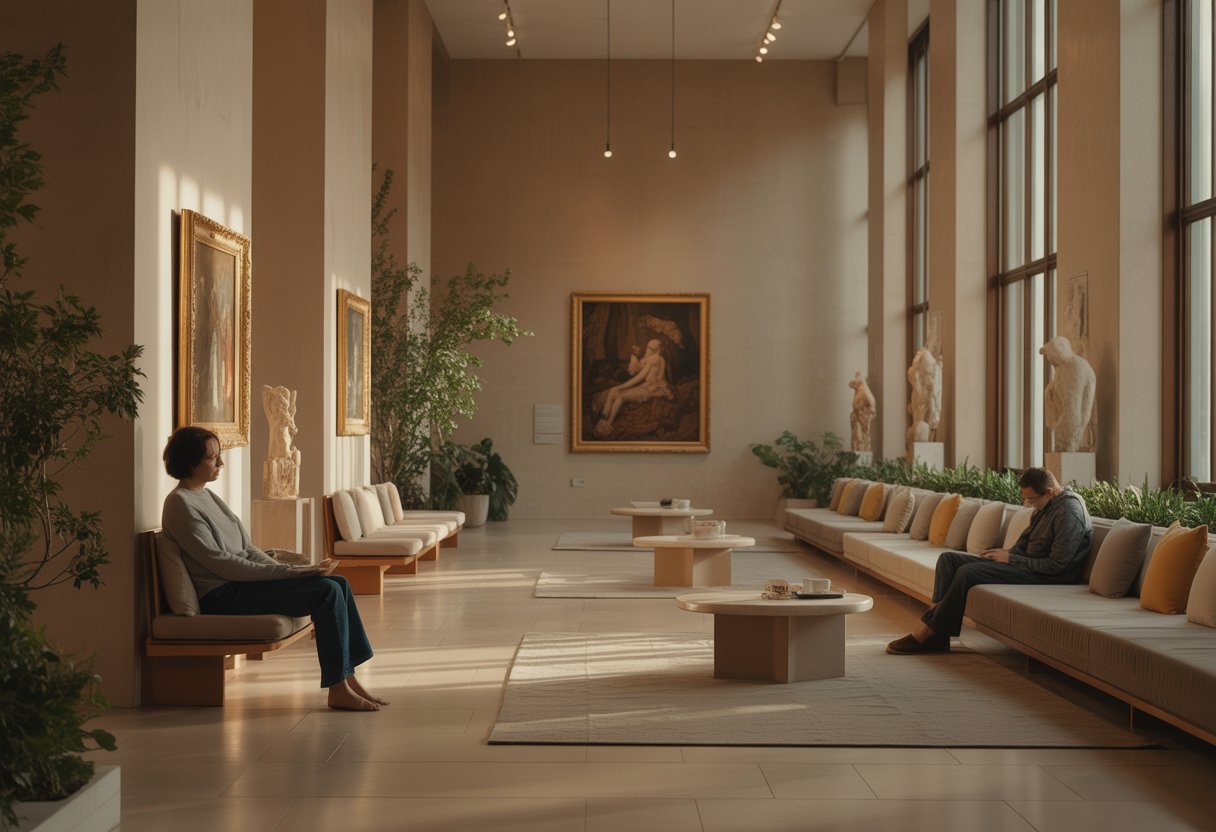
Visiting a museum gives you a chance to slow down. You can walk through quiet halls and admire art or interesting displays.
The calm atmosphere helps reduce stress. Many museums have special quiet spaces where you can sit and relax.
Some even let in a lot of natural light, making the room feel open and peaceful. These spots are perfect if you need a break from busy life or loud places.
If crowds are not for you, look for museums that offer special quiet hours or less busy times. During these periods, there will be fewer visitors, lower noise, and softer lighting.
This can help make your visit even more calming. Take your time as you move from one exhibit to another.
Let yourself pause and enjoy the details. Museums encourage you to notice small things, like the color of a mineral or the brushstrokes in a painting.
You can read more about finding peaceful museum spaces at the Natural History Museum or learn about how museums use quiet hours to help visitors relax on MuseumNext.
14) Find a quiet spot with a good view and simply observe
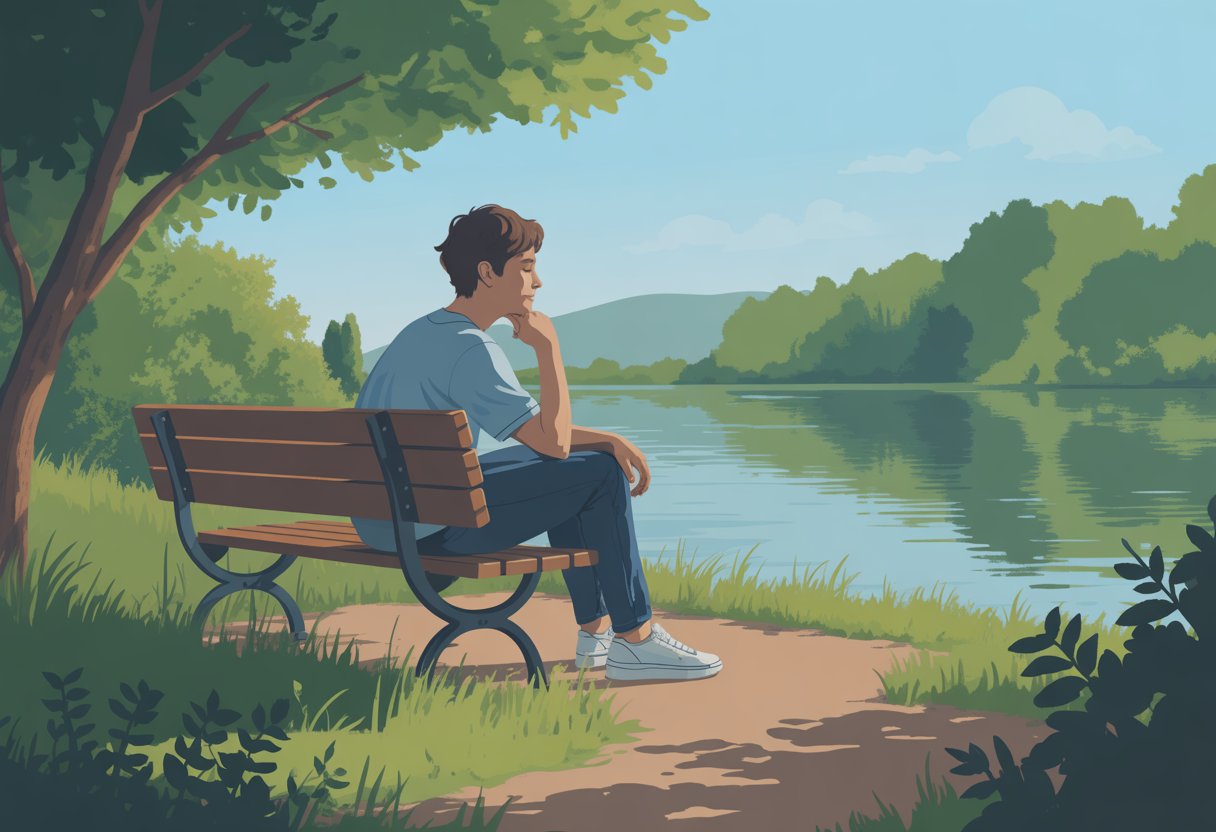
Look for a place where you can sit alone and feel comfortable. This could be a bench in a park, a porch at home, or even near a window with a nice view.
The key is to pick somewhere peaceful, away from loud or busy spots. Once you’re settled, just sit and take in what you see.
Watch trees swaying, cars passing, or people walking by. Notice how the light changes or how the clouds move across the sky.
Take a few slow breaths and let your mind relax. There’s no need to think about anything; just notice what’s happening around you.
Studies suggest that sitting in a quiet place and enjoying the scenery can help you unwind. You can learn more about the benefits of relaxing with a view at Peaceful Soul or Becoming Minimalist.
Try to spend a few minutes this way whenever you need a break.
15)
16) Do progressive muscle relaxation focusing on your feet
Progressive muscle relaxation (PMR) is a simple way to help your body let go of tension. When you focus on your feet, it can make you feel more grounded and calm.
Start by sitting or lying down in a comfortable position. Close your eyes if you want.
Take a slow deep breath in. Now, tense the muscles in your feet by curling your toes and tightening them as much as you can.
Hold this tension for about five seconds. Release the tension suddenly and let your feet relax.
Notice the difference in how they feel. Take a few slow breaths and enjoy the relaxed feeling.
Repeat this step if your feet still feel tight. Focusing on specific muscle groups like your feet is a key part of progressive muscle relaxation.
This quick exercise is easy to do at home, at work, or even before you go to bed. It can help take your mind off stress and bring your attention back to the present.
17) Listen to calming nature sounds or white noise
Listening to calming nature sounds or white noise can help you relax, especially after a long day. Sounds like rain, ocean waves, or leaves rustling are gentle and easy to listen to.
They can block out other noises that make it hard to focus or unwind. You don’t need special equipment.
Many free resources let you play nature sounds or white noise right from your phone or computer. Try free nature sounds for sleep and relaxation or pick a favorite track on YouTube’s white noise channels.
These sounds may help your mind drift away from stress. If you have trouble falling asleep, white noise can make your room quieter by covering up sudden sounds.
You might notice you feel calmer, or that it’s easier to focus while studying or reading. Experiment with different sounds until you find what works for you.
It could be a bubbling stream, gentle thunder, or even just steady white noise. Play them in the background as you work, meditate, or relax at home.
The key is to choose something that feels soothing and peaceful to you.
18) Write down three things you’re grateful for
Taking a few minutes to write down three things you’re grateful for can help you feel calmer and more positive. This simple habit helps you notice the good parts of your day, even when life feels busy or overwhelming.
You don’t have to pick anything huge. Try listing small things, like your favorite snack, a friendly smile, or a nice moment outside.
Focusing on these moments can help your mind slow down and find peace. Many people like to make gratitude a daily routine, such as writing in the morning or before bed.
You can write in a notebook, on your phone, or even a sticky note. Studies suggest that naming specific things can help you notice and appreciate them more.
If you need ideas, you can look at lists of things to be grateful for or read examples from gratitude journals.
19) Sip a warm cup of herbal tea mindfully
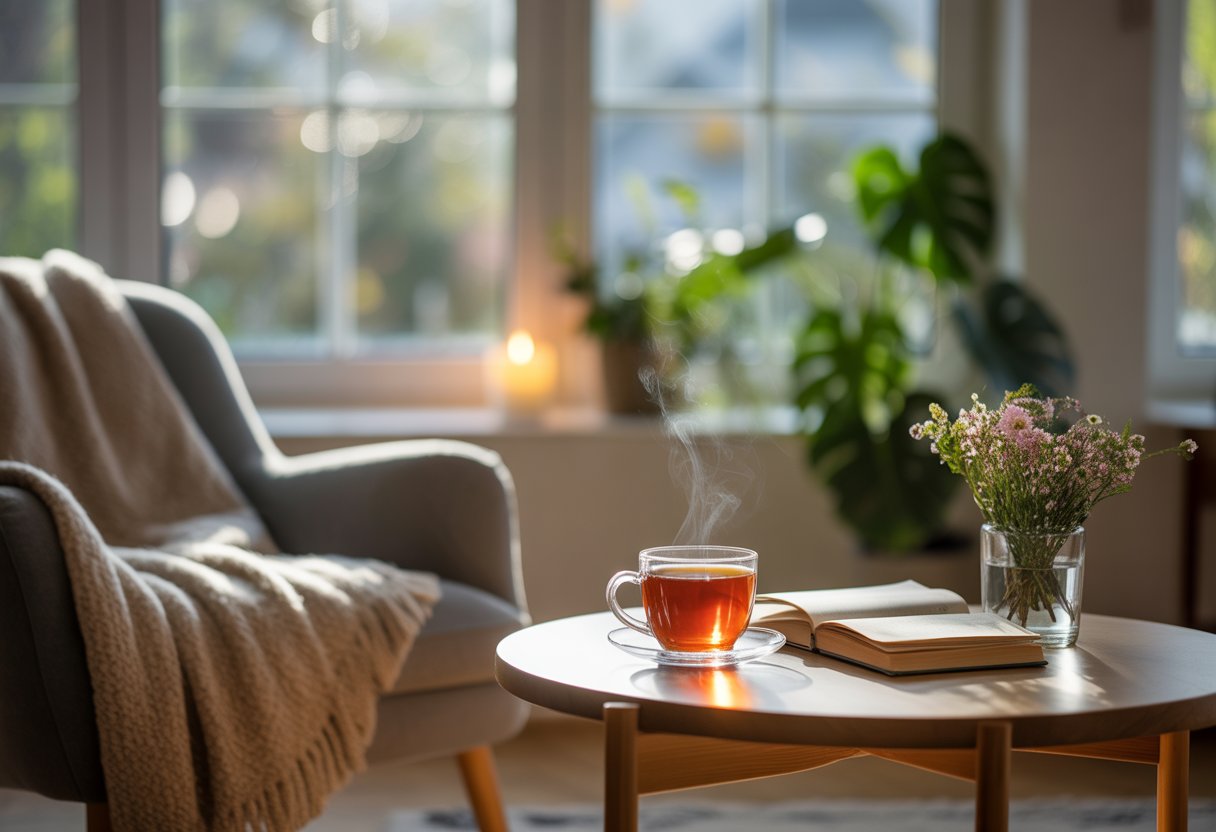
Take a few minutes to make yourself a cup of herbal tea. Choose calming teas like chamomile, lavender, lemon balm, or holy basil for a gentle, soothing effect.
Let the hot water steep the leaves or bag, and notice the aroma as it drifts up to your nose. Hold the warm cup in your hands.
Pay attention to its warmth and the gentle steam rising from the tea. Breathe in the scent and take a slow sip.
Let yourself focus only on the flavors and the feeling of the tea. Try to clear your mind of any worries and just notice the taste, the warmth, and each slow swallow.
Practicing this kind of mindful tea drinking can help invite calm into your day. Enjoy these few minutes as a simple break just for you.
With each sip, allow yourself to feel more at peace and present in the moment.
20) Use a guided meditation app for quick relief
When you feel stressed or need a break, guided meditation apps can help. These apps give you short, simple exercises that can calm your mind in just a few minutes.
You do not have to be an expert to try them. Most apps have sessions for beginners as well as a few options for people who already meditate.
You can find meditations focused on sleep, stress, or focus. Many people use popular options like Calm or Headspace.
If you have only a few minutes, you can try apps with short sessions like Simple Habit. Some apps even include stories, music, or breathing exercises.
You can listen in your car, at your desk, or right before bed. All you have to do is press play and follow the voice.
21) Take a few moments to disconnect from screens
Taking a short break from screens can help your mind and eyes rest. Notice how you feel after looking away from your phone, computer, or TV for even a few minutes.
Use this time to breathe deeply or look around the room. Try to focus on simple things, like listening to the sounds around you or feeling your feet against the ground.
Allowing yourself a screen-free moment can ease tension and help you feel more present. You might want to stretch, sip some water, or even step outside for fresh air instead of scrolling.
Taking regular breaks from screens is linked to better mental well-being. You could even plan small activities, like listening to music, meditating, or coloring, that don’t need any device at all.
Find other ideas for relaxing away from screens at this guide on screen-free relaxation. Try making screen-free moments a regular habit to boost your mood and energy.
22) Spend time gardening or caring for plants
Taking care of plants is a peaceful way to slow down and breathe. You don’t need a big garden—even a few houseplants can make a difference.
When you touch soil or water your plants, you focus on the present moment. This simple activity can help lower stress and give your mind a break from worry.
Being around greenery has been shown to help you relax. Just looking at green spaces can make you feel calm and clear-headed.
Fresh air, sunshine, and natural sounds can boost your mood while you work on your garden. Try watering your plants or gently wiping their leaves.
Small tasks like these can help you feel grounded and connected. If you want to create a peaceful corner, set up a mini Zen garden or choose easy-to-care-for plants.
Even simple activities like planting seeds or pulling weeds can help you unwind. You might find that spending a few minutes with your plants each day brings quiet joy to your routine.
23) Light a scented candle with lavender or chamomile
Lighting a scented candle is a simple way to relax at home. Choose a candle with lavender or chamomile for the best calming effects.
These scents are known for their gentle and soothing aroma. Lavender can help you feel less tense and bring a peaceful feeling to your room.
Chamomile gives off a soft, comforting smell and may help you unwind after a long day. The warm glow from the candle adds to the calm vibe.
You can use a candle in your bedroom, bathroom, or wherever you want a quieter atmosphere. Let the scent fill the air as you take some deep breaths.
This small step can help ease your mind and make you feel more at ease. Many people like using candles while reading or during a bath.
If you want more tips, check out this guide to creating a relaxing space with lavender and chamomile candles. Just remember to blow out your candle before leaving the room or going to sleep.
24) Visualize a peaceful place during a break
When you start to feel stressed or overwhelmed, take a moment to pause. Close your eyes and imagine a place that makes you feel safe, happy, or calm.
This could be a beach, a quiet forest, or even a cozy room from your memories. Picture the details, like the way the sun feels, the sounds you hear, or the colors around you.
Try to imagine the smells in that place or any gentle breezes. Let your mind wander through this peaceful scene for a few minutes.
Focusing on these calming details can help your body relax and give your mind a break from stress. You don’t need any special skills for this exercise.
If you have trouble thinking of a place, you can focus on a special person or a favorite memory too. For more ideas, you can read more about calming visualizations on Inner Health Studio’s page about relaxing with visualization scripts.
25) Practice mindful chewing during meals
Take a moment to slow down and focus on how you chew your food. Notice the taste and texture with each bite.
This can help you enjoy meals more and feel calmer. Try putting away your phone, computer, and other distractions while you eat.
Focus just on your food and the act of chewing. You might find the flavors and smells become more noticeable.
Chew slowly and try to make your meal last longer, maybe even set a timer if that helps. Taking smaller bites can make it easier to pay attention to each mouthful.
For more tips, check out these mindful eating ideas from Harvard Health. Being mindful of your chewing can also help you eat less quickly.
This is good for your digestion and can make you feel more satisfied after eating. Focusing on silent chewing can add to the peaceful feeling during your meal.
Learn more from this guide on eating gracefully.
26) Stand outside and feel the sun on your face
When your day feels stressful or busy, taking a short break outside can help you reset. Step out, close your eyes for a moment, and let the sunlight warm your skin.
Sunshine can help lift your mood and give you a gentle energy boost. Even five minutes outdoors can make a difference, especially if you feel stuck indoors all day.
Feeling the sun on your face signals to your body that it’s daytime, which can help you feel more awake. If you’re able, try to leave your phone inside so you can focus on the moment.
Fresh air and natural light might help you feel calmer. Experts say that getting some sun and fresh air can even help you think more clearly.
Try listening for the sounds around you, like birds singing or the wind in the trees. Enjoying nature, even just outside your door, is a simple way to find some peace during a busy day.
27) Journal five minutes about your day’s feelings
Take just five minutes and write down how you’re feeling right now. This is a simple way to clear your mind and notice things you might not usually catch during a busy day.
Even short bursts of journaling can help you sort through your emotions. You don’t need to use fancy words or write a long story.
Just be honest with yourself. Write about what made you smile, what stressed you out, or something that made you think.
If you ever feel stuck, try using easy five-minute journaling prompts to get started.
You might notice that you feel calmer after writing things down. It’s an easy, private way to take care of yourself, especially on hectic days.
28) Listen to your favorite relaxing music softly
Sometimes all it takes to feel calm is hearing your favorite gentle music. Play it at a low volume so it doesn’t overpower your thoughts.
Soft sounds can help make your space feel peaceful. You can choose any style you enjoy.
Some people like piano or nature sounds, while others pick soft jazz, acoustic guitar, or even light pop. You don’t need any special equipment—a phone, radio, or speaker will do.
If you need ideas, you can find playlists made for relaxation online. There are lots of options, like relaxing piano music for stress relief or calm music for concentration.
Free online stations like AccuRadio offer many types of relaxing music, too. Try this when you are working, reading, or winding down.
Let the music play in the background while you go about your day. You might notice your mood feels a little lighter and your mind becomes less stressed.
29) Take a warm bath with Epsom salts
A warm bath can help your body and mind relax after a long day. Adding Epsom salts makes it even more soothing.
These salts dissolve in water and may help ease tired muscles. To start, fill your tub with comfortably warm water.
Next, pour in one to two cups of Epsom salts as the water runs. Be sure to swirl the water so the salts mix in well.
Soak in the bath for about 12 to 20 minutes. This gives your muscles time to relax, and lets you enjoy the calming feeling of the warm water.
For extra relaxation, you can dim the lights or play soft music. You might also add a few drops of your favorite essential oil.
Lavender is a popular choice because of its calming scent, as explained by the Epsom Salt Council. Drink a glass of water before and after your bath to stay hydrated.
Take your time and allow yourself to enjoy this peaceful moment.
30) Focus on slow, deliberate blinking to rest your eyes
If you spend a lot of time looking at screens, your eyes might start to feel dry or tired. One easy way to give them a break is to practice slow, gentle blinking.
Start by closing your eyes slowly, then pause for a second before opening them again. Try to make each blink soft and relaxed, not rushed.
This simple action keeps your eyes moist and gives your eye muscles a moment to reset. It can also help calm your mind for a brief moment.
Some eye doctors recommend taking a few seconds every hour to do slow blinking exercises. Tiny changes like this can make your eyes feel less strained during the day.
To learn more about this technique and its benefits, check out this slow blinking technique for calming nerves and soothing dry eyes.
31) Use a calming essential oil on your wrists
If your day feels hectic, a gentle way to slow down is by using calming essential oils on your wrists. Just a drop or two can offer a peaceful moment, even when you are on the go.
Some popular calming oils are lavender, chamomile, and frankincense. These oils are known for their relaxing scents and are easy to find.
To use them, first add a few drops to a carrier oil, like coconut or sweet almond oil. This helps protect your skin.
Roll or dab the blend onto your wrists. You can quietly inhale the scent throughout the day whenever you need a quick break.
The soothing aroma may help ease stress and tension. If you want to try making your own blend, choose your favorite calming oils and mix them.
Keep the oil in a small bottle so you can use it whenever you need to relax. You can find easy instructions for making calming blends and using them on your wrists by checking out this guide to relaxation with essential oils.
Why Relaxation Matters
Taking time to relax each day helps you care for your mind and body. Reducing stress has both short-term and long-term effects on your mood, energy, and health.
The Impact of Everyday Stress
Stress can come from many places, such as work, family, or trying to keep up with a busy schedule. When you feel stressed, your body reacts by raising your heart rate, tensing your muscles, and sometimes making you feel worried or tired.
Over time, this can build up and lead to headaches, trouble sleeping, and even weaken your immune system. Too much stress may also make it hard to focus or enjoy your daily life.
You might find yourself losing patience, making mistakes, or forgetting things more often. Some people get stomachaches or feel tightness in their shoulders and back.
If you do not manage stress, it can raise your chance of health problems like high blood pressure and heart disease. That is why learning how to spot stress and deal with it early can help you feel better every day.
It is also a way to protect your long-term health.
How Relaxation Supports Well-Being
Relaxation is more than just taking a break. It gives your mind and body a chance to reset.
Simple relaxation methods, like deep breathing or stretching, help lower your heart rate and relax tense muscles. This makes you feel calmer and can help you handle challenges with a clearer mind.
Many people notice improved sleep after adding short relaxation routines to their day. You may also find you have more patience, feel less overwhelmed, and get a mood boost.
Relaxation techniques, such as those found in easy breathing exercises or micro-meditations, are helpful even on the busiest days.
Here is a quick list of benefits you might experience:
- Better focus
- Less muscle tension
- Fewer headaches
- Improved mood
- More energy
Relaxation supports your well-being by helping you recover from stress, clear your mind, and feel your best.
Making Relaxation a Daily Habit
Relaxing every day can help lower your stress and make it easier to enjoy life. Creating time for calm moments and shaping a space that feels peaceful both play a big part in making relaxation stick.
Simple Scheduling Tips
Adding relaxation into your busy schedule might seem hard, but a few changes can help. Start by picking a set time each day, like right after waking up or before bed.
Consistency makes it easier for your body and mind to expect these breaks. Use a planner, phone alarm, or wall calendar to remind you.
Place short activities throughout your day, such as deep breathing, stretching, or quick meditations. Even taking a five-minute walk can be enough to relax your mind.
You can try batching tasks, which means finishing similar chores at the same time so you have a bigger block for rest. Make relaxing activities a reward; for instance, enjoy a cup of tea or listen to music after completing a task.
If you need more ideas, check out easy daily mindfulness activities to get started.
Creating a Calming Environment
Having a calming environment supports daily relaxation. Keep clutter to a minimum and decorate with soft lighting, simple plants, or relaxing artwork.
If you can, pick one small area of your home as your relaxation spot. Use calming scents like lavender or vanilla to help your brain wind down.
Try soft music or nature sounds to block out busy noises and help your mind feel calm. This could be as simple as playing quiet sounds from your phone.
Keeping your space fresh and organized means there is less to distract you when it’s time to relax. Even changing one thing, such as adding a comfortable chair or soft blanket, can make a big difference.
For more ways to unwind, see these quick relaxation techniques.
Frequently Asked Questions
There are many simple and quick ways to relax that fit into even the busiest days. With just a few minutes and small changes, you can lower stress and feel calmer.
What are some effective methods to relax at home after a busy day?
Try deep breathing exercises, or take a few minutes for a short meditation where you focus only on your breath. Stretching your neck and shoulders while sitting on the couch can help your body unwind.
Listening to calming music, reading a favorite book, or even chewing gum can boost your mood and help you relax.
If you need space, spending a few quiet minutes alone to gather your thoughts may also help.
How can I quickly calm my mind when feeling stressed?
You can use quick breathing techniques like inhaling deeply for four seconds, holding for seven, and exhaling for eight. This is known as the 4-7-8 breathing method.
Try saying a calming phrase or mantra out loud or in your mind for one minute. Setting a timer for 60 seconds helps you focus only on relaxation and makes it feel easier to do.
Can you suggest some relaxing activities suitable for adults with hectic schedules?
Short walks outside, even if just around your block, can clear your head fast. Stretch at your desk to relieve body tension.
Listen to a calming guided meditation for a few minutes before bed. If you are pressed for time, micro-meditations and simple breathing exercises can fit anywhere in your day.
What are the best ways to alleviate anxiety and relax both my mind and body?
Progressive muscle relaxation helps by tensing and relaxing your muscles one at a time. Visualization techniques let you picture a peaceful scene, using your senses to feel calm.
Both techniques help your mind and body slow down together. Try gentle stretches, calming scents like lavender, or a warm drink to comfort yourself.
If you feel overwhelmed, taking five minutes alone can bring quick relief.
What relaxation techniques are recommended for students with demanding study routines?
Mindful breathing and one-minute meditations work well between study sessions.
Try closing your eyes, taking a few deep breaths, or stretching your arms and neck at your desk.
Short walks, listening to soothing music, or chewing gum during breaks can also help clear your mind and lower stress.
How can I discover the relaxation methods that work best for me?
Test out different tips, like breathing exercises, stretching, or mindfulness. Notice what feels easy to do and what actually makes you feel better.
Keep a short list of your favorite relaxing activities. Try them at different times.