
Doodling isn’t just about making random shapes on a page—it’s a simple way to stay present and give your mind a break from daily stresses. With mindfulness doodles, you can gently shift your focus to the here and now, helping you feel calmer and more centered. As a bonus you can download our FREE Printable Mindfulness Journal Pages at the end of this post!
You don’t need any special skills or artistic experience to begin, just an open mind and a desire to enjoy the process. Whether you’re looking for a creative outlet or a new tool for self-care, exploring mindfulness through doodling can be a gentle, accessible way to reconnect with yourself.
1) Start with simple shapes like circles and spirals
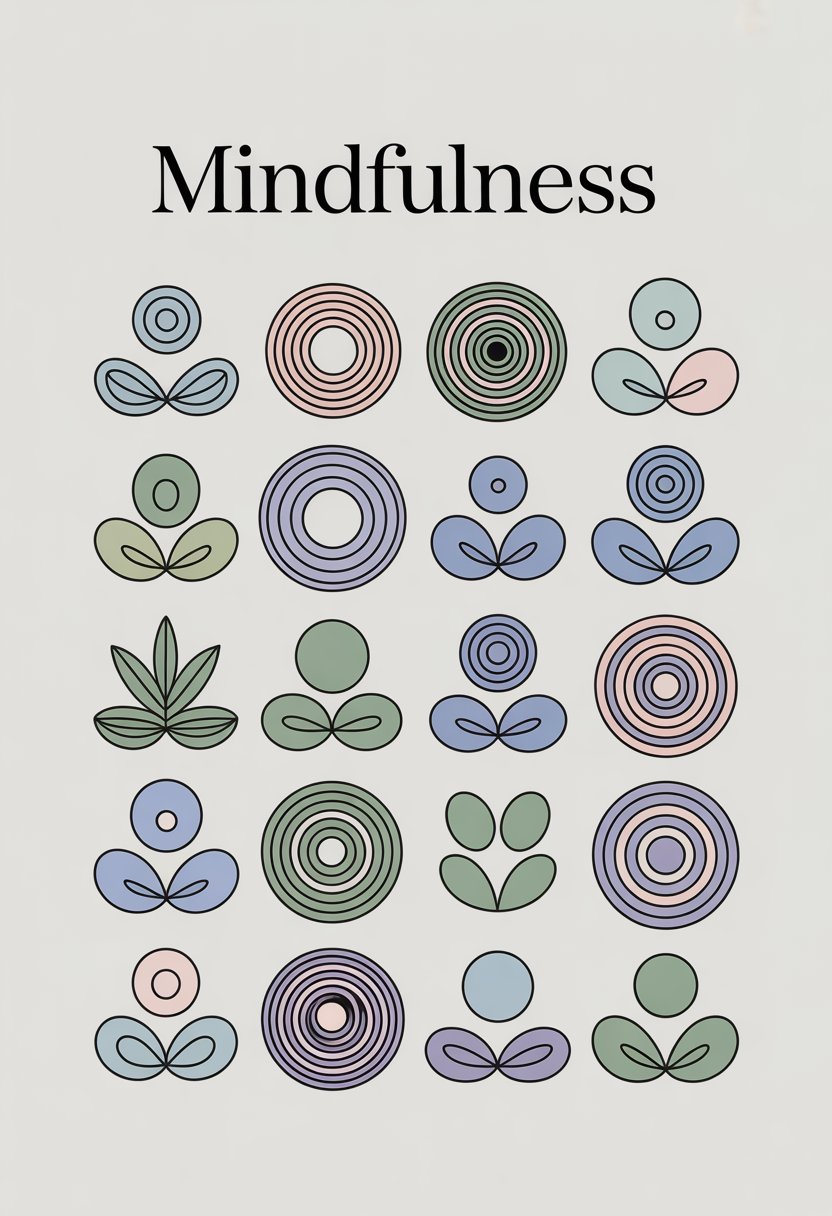
When you begin mindfulness doodling, start with the basics. Circles, spirals, triangles, squares, and wavy lines are good choices. These shapes are easy to draw and you do not need any special skills.
As you make these lines and shapes, try to focus on how your hand moves. Notice the feel of the pen or pencil gliding over the paper. This helps you stay in the moment and feel more relaxed.
Drawing the same shape over and over can be calming. You can fill your page with rows of circles or add spirals wherever you like. There’s no need to worry about making your doodles look perfect.
Let your creativity take the lead. If you want to change a shape or connect lines, go for it. Enjoy the process and let your mind rest as you doodle.
2) Focus on the sensation of the pen in your hand

Take a moment to notice how the pen or pencil feels against your fingers. Is it light or heavy? Cool or warm? Holding your pen, pay attention to its shape and how it rests in your grip.
As you start to draw, sense the gentle pressure between the tip and the paper. Listen to the faint scratch or slide the pen makes. Let your hand simply move, without worrying about what you’re creating.
Feel the movement of your wrist, your fingers guiding each mark. Notice the small changes in contact as your hand shifts and glides. Whenever your mind wanders, return your focus back to these physical sensations.
This practice keeps you rooted in the present. Your attention to touch and movement can make the experience of doodling more calming and enjoyable. Each line is a chance to reconnect with the simple act of drawing, one sensation at a time.
3) Doodle affirmations such as ‘I am worthy’
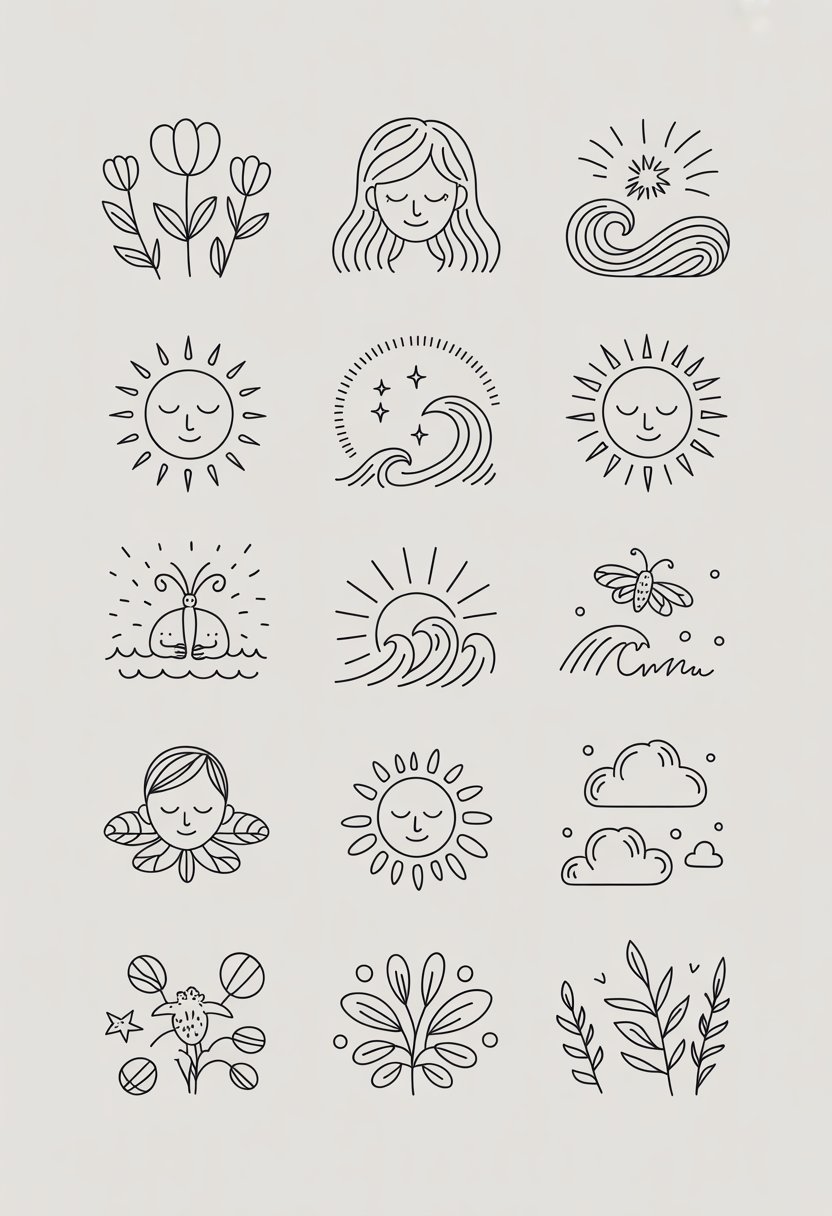
Adding affirmations to your mindfulness doodles can help reinforce positive beliefs. Simple phrases like “I am worthy,” “I am strong,” or “I am enough” are easy to include and see each time you reflect on your doodles. Drawing these words with bright colors or creative designs makes them stand out and adds a personal touch.
These affirmations act as gentle reminders whenever you look at your page. The act of drawing them can help you pause, focus on the present, and acknowledge your value. You don’t need artistic skills to get started—just use handwriting, playful letters, or simple shapes.
Try surrounding your affirmation with doodled hearts, stars, or anything that feels uplifting. You can switch up the words to suit your mood or needs that day. Give yourself permission to be creative and honest with your affirmations.
4) Use repetitive patterns to calm the mind
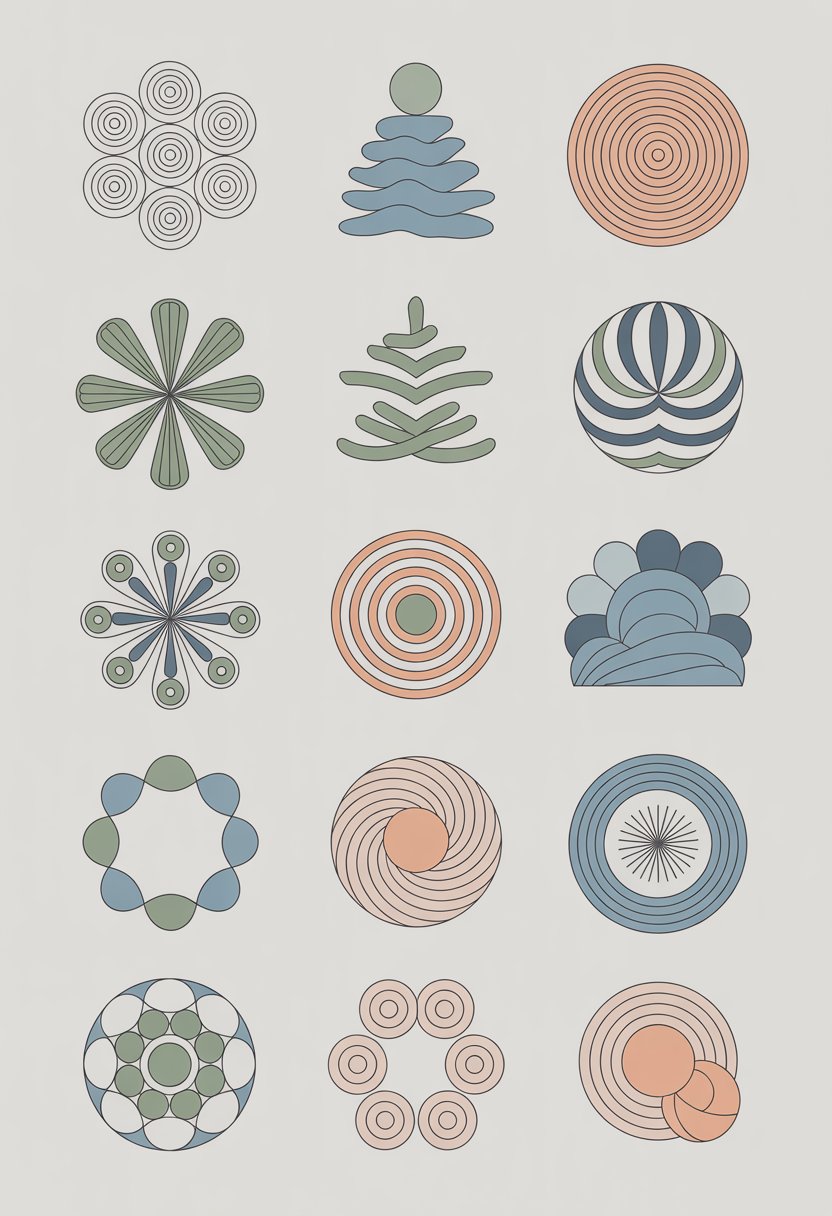
Doodling with repetitive patterns can help bring your attention to the present moment. When you focus on drawing the same shapes, lines, or curves over and over, your mind has a chance to slow down and let go of nagging thoughts.
Try simple shapes like dots, circles, zigzags, wavy lines, or spirals. These patterns don’t need to be perfect—they’re just for you. The act itself matters more than how your doodle looks.
Repeating the same motion creates a gentle rhythm that can make you feel more settled. It’s a way to give your anxious thoughts less space by using your hands and creativity.
Mix things up by varying the sizes or directions of your patterns. You might notice that doodling in this repetitive way helps you relax, even if it’s just for a few minutes.
You don’t need fancy materials. Grab a pen or pencil and scrap paper, and let your hand move however it feels right. Let your mind rest as you fill the page with your chosen pattern.
5) Try BreathDoodles™ for combined breathing and drawing
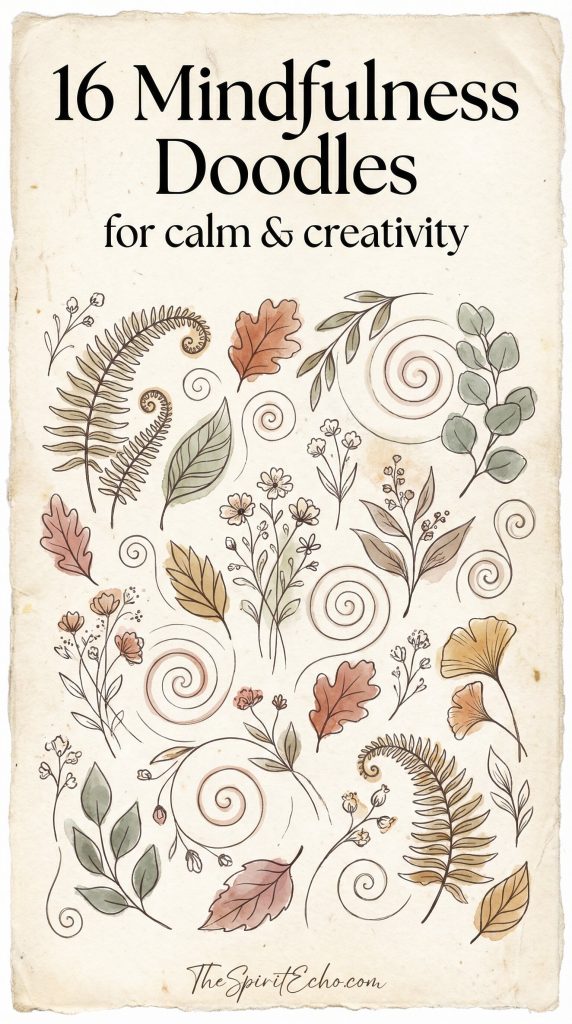
BreathDoodles™ bring together mindful breathing and simple drawing to help you slow down and focus. You don’t have to be an artist to try this out; all you need is a pen and paper.
Begin by sitting comfortably and paying attention to your breath. As you inhale, let your pen make a loose shape or line. As you exhale, continue the doodle, letting each movement flow with your breathing.
You can repeat this process for several breaths. Allow your drawing to grow naturally, without correcting or planning too much.
Don’t worry about how your doodle looks. The point is to let your breathing guide your hand, grounding you in the present moment.
This practice only takes a few minutes and can be done almost anywhere. It’s a gentle way to reduce stress and encourage a sense of calm.
6) Explore Dr. Patricia Isis’s Mindful Doodle Book
If you’re interested in mindful doodling, Dr. Patricia Isis’s Mindful Doodle Book is a helpful resource to check out. This book includes 75 creative exercises designed to help you use doodling as a way to relax and focus on the present moment.
The prompts in the book encourage you to express your feelings and thoughts visually, whether you’re happy, excited, frustrated, or simply curious. Each exercise combines elements of mindfulness with intuitive drawing, so you don’t need any artistic background to participate.
You’ll find doodling activities grouped around emotions and daily experiences. As you work through the exercises, you can explore how drawing shapes, lines, or patterns can help you tune into your emotions and reduce stress.
Dr. Isis’s approach is accessible and gentle. You’re invited to doodle freely, without worrying about making perfect art.
Taking just a few minutes to try one of these exercises can be a calming addition to your day. The book is designed to support your emotional well-being and provide a simple, creative way to practice mindfulness.
7) Create wavy line patterns for relaxation
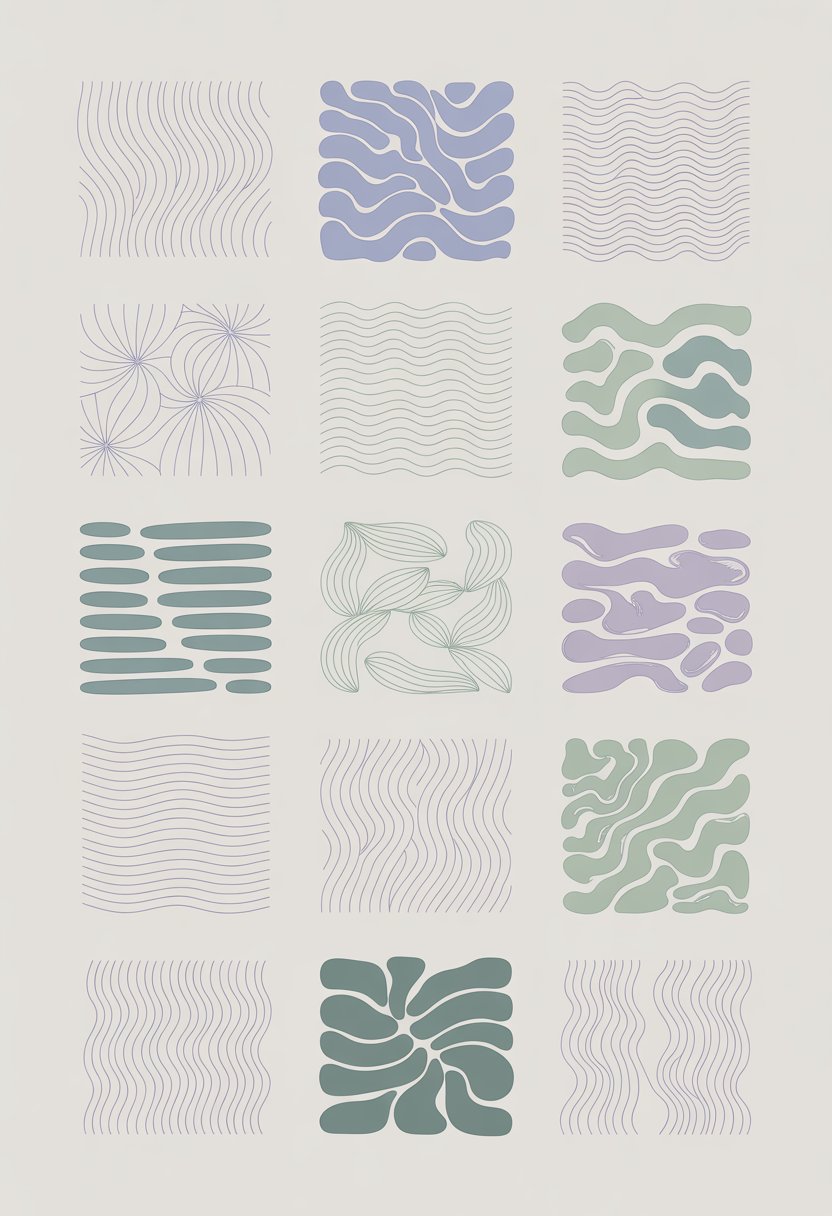
Wavy line patterns are a simple way to bring mindfulness into your doodling. Start by drawing slow, gentle waves across your page. Let your pen flow in a relaxed rhythm without worrying about perfection.
You can layer lines or vary their spacing to create different effects. Experiment with curvy, overlapping, or parallel waves to see what feels calming to you. There’s no need to plan—just follow where your hand goes.
Many find the repetitive movement of drawing wavy lines soothing. This focus on gentle shapes can help quiet your thoughts and anchor you in the present.
Try filling spaces between the lines with dots, shades, or little patterns. Breathe deeply as you doodle, paying attention to each movement. Wavy line patterns are easy to start and can be done anywhere, making them great for quick relaxation.
8) Draw zentangles to reduce anxiety
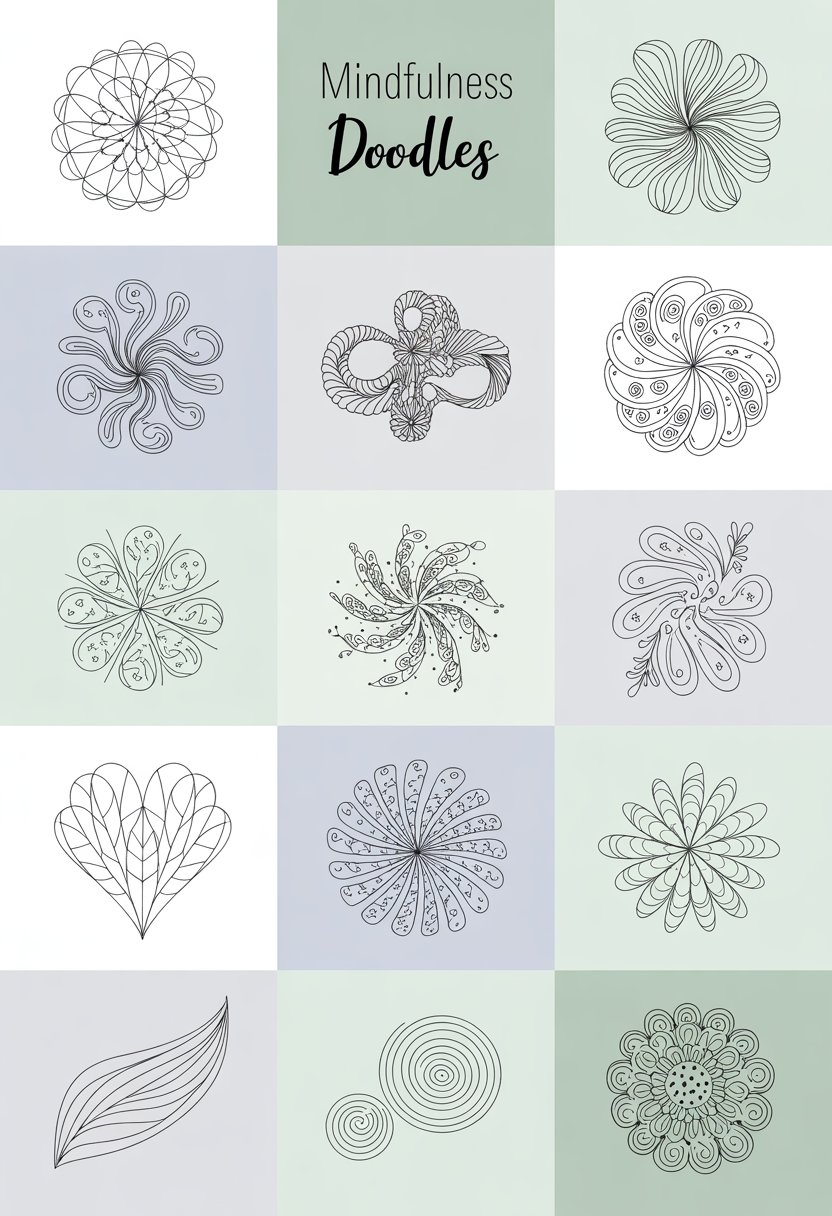
Zentangle drawing is a relaxing way to manage anxiety. You don’t need any special art skills—just a pen, paper, and a few minutes. Start with a simple square and fill it with small, repeating patterns called “tangles.”
Focus on the movements of your hand as you draw each line or shape. Let your mind settle into the rhythm of these repeated patterns. Zentangles help you stay in the moment, which can ease stressful thoughts.
Try not to worry about making it perfect. The process, not the final look, matters most for mindfulness. By drawing tangles, you may find a small sense of calm and focus returning. Give yourself permission to simply enjoy the creative moment.
9) Focus on movement, not perfection
When you’re doodling mindfully, try to pay attention to how your hand moves across the page. Notice the way your pen or pencil feels as it glides or scratches over the paper. The sensation of motion can help bring you into the present moment.
Don’t worry about making your lines straight or your shapes perfect. There’s no need to compare your doodles to anyone else’s or aim for a flawless design. Mindful doodling is about enjoying the process, not about creating art for display.
If your hand wobbles or a line goes off course, let it be. These little imperfections are part of your unique style. Staying focused on the simple act of moving your hand can be calming and grounding.
Let yourself experiment with different patterns and shapes. Focus on how it feels, rather than what it looks like. Remember, the practice is about relaxing and being present—not about perfection.
10) Use mindful doodling as a daily 5-minute stress relief
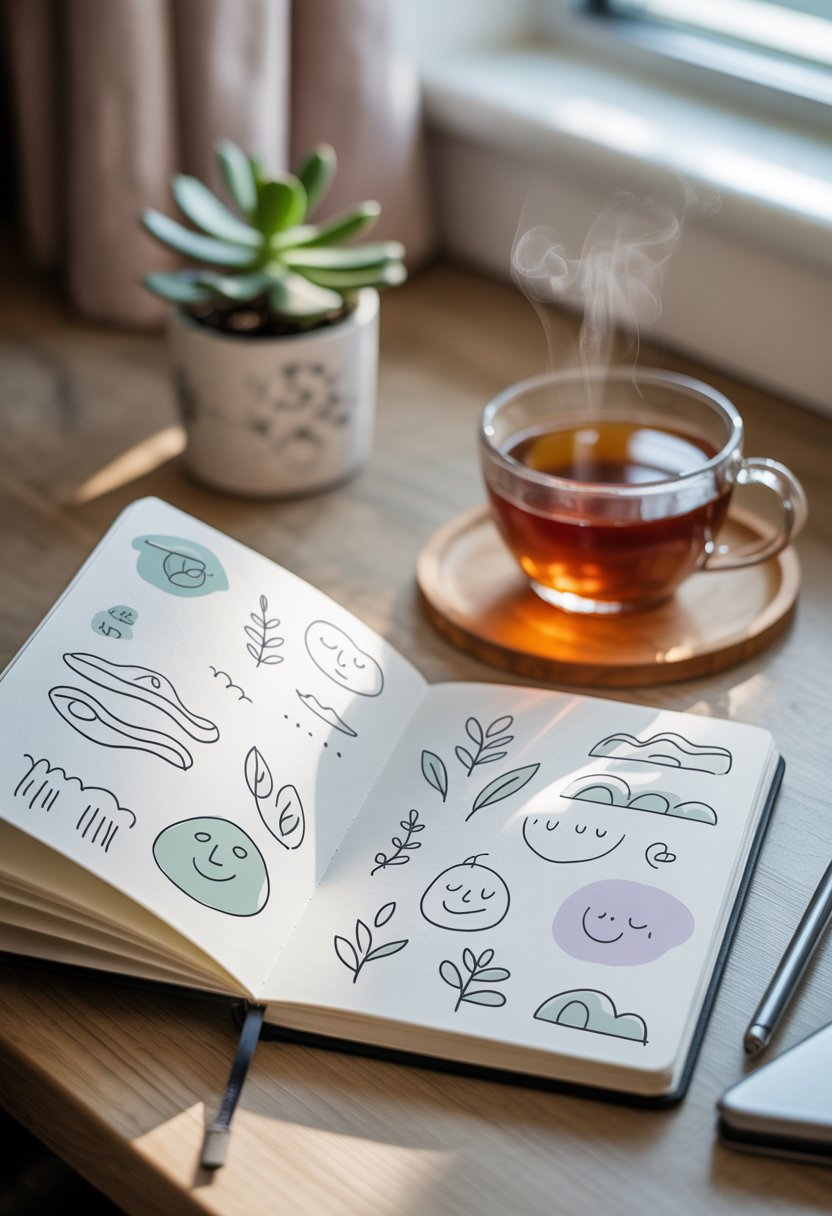
Setting aside five minutes each day for mindful doodling can provide a gentle break for your mind. This practice invites you to pause and focus on the simple act of drawing, helping to create a sense of calm even on busy days.
You can start with just a pen and paper—no need for special supplies or artistic skills. Letting your hand move freely across the page while you pay attention to your breath can bring your thoughts into the present moment.
The repetitive motions of doodling are soothing and can help you ease feelings of stress or anxiety. These brief moments offer you a chance to reset and recharge, even if you have a packed schedule.
Try to make this a daily habit by setting a timer for five minutes or choosing a specific time each day. Small practices like these add up over time, supporting your well-being with very little effort.
11) Incorporate texture by varying your pen strokes
Adding texture to your doodles makes them more interesting and lively. You can create different types of texture by changing the way you move your pen across the paper.
Try using quick, short strokes in one area and slow, flowing lines in another. You might explore hatching, cross-hatching, or even small scribbles to produce a variety of effects.
Mixing long, straight lines with tiny dots or curved swirls can give your drawings more depth. Adjust the pressure on your pen to make some lines bolder and others lighter for a subtle change in texture.
Experiment with repeating patterns, like closely spaced lines or small zigzags. These simple changes help you pay attention to the details in your art, which supports mindfulness as you draw.
Focus on how each stroke feels as you move your hand. You’ll start to notice which textures you like most and how they change the look of your doodles.
12) Try affirmations like ‘I am focused’ during doodling
As you doodle, try repeating simple affirmations such as “I am focused.” Adding words like these to your creative time can help center your thoughts.
Doodling naturally encourages relaxation, so pairing it with gentle affirmations can make the experience more intentional. You might choose to color over affirmations or write them alongside your doodles.
You don’t have to say the affirmation out loud. Silently repeating “I am focused” while drawing lines or shapes is just as effective. This quiet repetition can serve as a gentle mental reminder to stay present.
Affirmations combined with doodling may increase your awareness of the moment. It’s a way to anchor your mind if you find it wandering while you draw.
Try experimenting with different affirmations, but keep them positive and direct. Choose words that feel natural to you and support your focus or relaxation. Let the affirmations flow with your doodle, making your practice feel both creative and mindful.
13) Doodle to stay anchored in the present moment
When your mind starts to wander or anxiety creeps in, picking up a pen to doodle can help bring your focus back to the present. The simple, repetitive motions keep your attention on the movement of your hand and the shapes forming on the page.
You don’t need artistic skill for this. All that matters is allowing yourself to notice each line and curve as you make it. This gentle awareness helps keep your thoughts from drifting to worries or distractions.
Try tracing or repeating patterns, shapes, or even your favorite word. Focusing on what you’re drawing helps pull your attention away from racing thoughts. Before long, you may find yourself more calm and grounded.
As you doodle, simply pay attention to how the pen feels against the paper, and the shapes that appear. This mindful drawing practice can make it easier to return your attention to the here and now whenever you need it.
14) Use doodling to express emotions non-verbally
Doodling gives you a gentle way to express feelings without needing to find the perfect words. When emotions feel tangled or difficult to talk about, you can let your hand move and see what comes out on the page.
You might notice that certain shapes, lines, or patterns appear more often when you’re stressed or calm. Sometimes, you can capture feelings through color, pressure, or the size of your marks. There’s no need to judge or analyze—just allow yourself to let emotions flow into your doodles.
This kind of non-verbal self-expression can be especially helpful if you struggle to talk about what’s going on inside. Your doodles don’t have to make sense to anyone else. What matters most is that you feel a little lighter or more understood once you finish.
15) Try doodling inspired by nature patterns
Nature offers a rich source of calming patterns to draw. You can start with something simple, like leaves, flowers, or flowing water shapes.
Look at the lines on a leaf or the structure of a seashell for ideas. Try repeating these shapes or arranging them in new ways.
Botanical doodles can help you relax and bring your focus to the present moment. Drawing wavy lines, spirals, or tree branches lets your mind wander gently.
You don’t have to make your doodles realistic. Use any colors or line styles you like. The goal is to let natural shapesspark your creativity without pressure.
If you find yourself stuck, glance outside or at photos of plants and landscapes for inspiration. Every pattern you see in nature is unique, and your doodles can be, too.
Experiment with combining several natural elements on one page. A cluster of pebbles, a few ferns, or simple waves can make your doodling practice more interesting. Let your pen flow and enjoy the peaceful energy that nature-inspired patterns bring to your page.
16) Let go of the need to create masterpieces
It’s easy to feel pressure to make every doodle look impressive or artistic. But mindfulness doodling isn’t about aiming for perfection or creating gallery-worthy pieces.
Instead, try to focus on the act of drawing itself. Let your pen move across the page without worrying about mistakes or the final outcome. This gives you space to relax and be present.
A simple line or a messy shape is enough. Your doodles don’t need to be beautiful or even make sense to anyone else. What matters is how the process helps you feel calm and grounded.
If your drawings don’t turn out as you imagined, that’s completely okay. Each mark is part of your experience in the moment, and that’s what counts.
Benefits of Practicing Mindfulness Through Doodling
When you doodle mindfully, you engage your mind and body in a calming process that goes beyond simple drawing. This practice can help you manage stress while sparking new ideas during your daily routine.
Stress Relief and Mental Clarity
Mindful doodling gives you a way to slow down and shift your focus from worries to the present moment. As you draw repetitive shapes or patterns, your mind settles, and anxious thoughts often fade into the background. Simple pen strokes can interrupt spiraling thoughts, giving your mind a break.
You don’t have to be an artist or follow any rules. The act itself is enough to promote relaxation. Many people use mindful doodling as a self-soothing tool when feeling overwhelmed or restless. Studies suggest that repetitive, gentle drawing can help regulate breathing and lower stress hormones.
Taking a few minutes each day to doodle can leave you feeling more clear-headed and centered. Your mind gets a gentle reset, helping you return to tasks with new focus.
Boosting Creativity
Mindful doodling opens up pathways in your brain that help you think creatively. As you sketch, new patterns and connections may emerge that you didn’t expect.
This low-pressure environment encourages you to try out ideas without worrying about the result. You’re free to experiment, and this can spark insights for other projects or challenges in your life.
A quick list of creative benefits you may notice:
- More original ideas when problem-solving
- Easier brainstorming for work or play
- Less pressure to be “perfect,” so you take more risks
Letting your mind wander through doodling can lead to solutions and creative breakthroughs you might have missed otherwise.
Tips for Creating Your Own Mindfulness Doodles
Doodling mindfully is easier when you start with a calming setup and choose patterns that you find enjoyable. The process is enhanced when you make choices that fit your mood, skill level, and available space.
Setting a Relaxing Environment
Begin by finding a quiet place where you feel comfortable and free from distractions. Good lighting matters—a well-lit spot helps you see details and prevents eye strain. Keep your workspace tidy and set out your favorite supplies, whether that’s a simple pen or a sketchbook with assorted colors.
Some people enjoy adding a little ambiance by playing soft music, lighting a candle, or having a cup of tea nearby. Small touches like these can make the activity feel soothing. Take a few deep breaths before you start, and allow yourself time without a rush.
If possible, dedicate this space and time only to your doodling. Let others know you’d prefer not to be disturbed. This focused environment helps you relax and makes the process much more enjoyable.
Choosing Simple Patterns
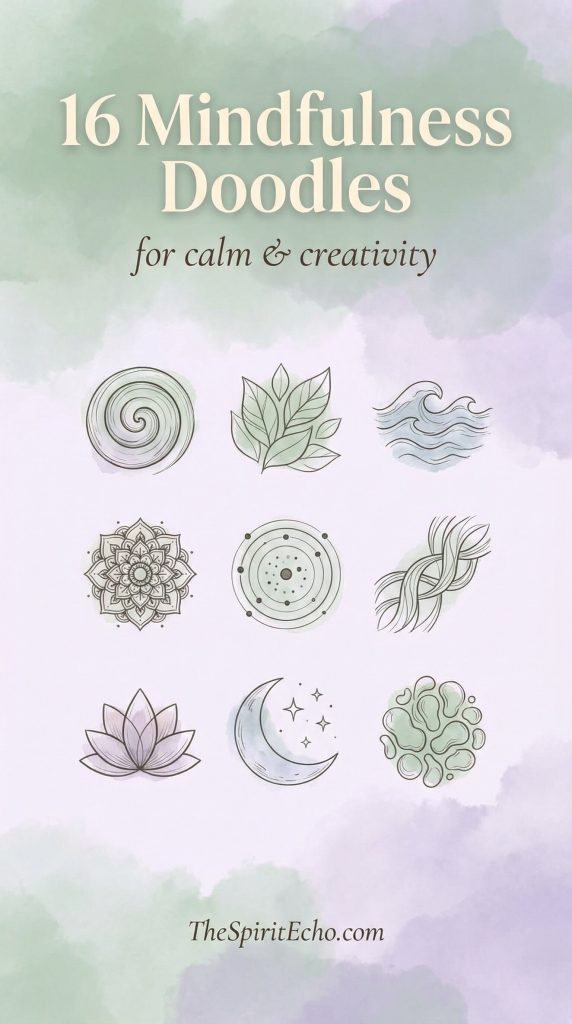
Simple patterns are best for mindfulness doodling, especially if you’re just starting out. Try easy shapes like circles, triangles, straight lines, or waves. Geometric shapes and botanical motifs—like leaves, flowers, or vines—can be repeated to fill a page or create borders.
Using repetition is helpful. Drawing the same shape or line again and again brings a sense of rhythm and calm. You can also experiment by combining basic forms to build more complex designs.
For variety, explore different arrangements: scatter shapes randomly, line them up, or create symmetry. The main goal is to keep it as simple or as detailed as you enjoy, without worrying about mistakes. Let your hand move freely and notice how each stroke feels.
Frequently Asked Questions
Mindful doodling is accessible to everyone, no matter your artistic skill level. With the right resources, you can quickly start practicing exercises that bring creativity and calm into your day.
How can I start practicing mindful doodling?
Begin with just a paper and pen or pencil.
Start drawing simple shapes such as circles, spirals, or waves and focus on how the pen feels as it moves.
You can also try repeating patterns or doodling positive words like “I am enough” to center your thoughts.
Where can I find a free guide to mindfulness doodles?
Many art therapy and mindfulness websites offer free basics for getting started.
Sometimes local libraries or community centers hold workshops and may provide free resources.
A quick internet search for “free mindfulness doodle guide” can also yield printable instructions.
Can mindful doodling help reduce stress?
Yes, mindful doodling can offer real stress relief.
Drawing repetitive patterns and focusing on your breath can help quiet anxious thoughts and promote relaxation.
Techniques like BreathDoodles™ blend breathwork and drawing specifically for this purpose.
Are there any YouTube channels dedicated to teaching mindfulness through doodling?
YouTube has several channels that offer guided doodling sessions with a mindfulness focus.
Search for channels using terms like “mindful doodling,” “meditative drawing,” or “zentangle for mindfulness.”
Many creators post step-by-step videos for all skill levels.
What are Zentangles and how do they relate to mindfulness and doodling?
Zentangles are a structured form of drawing using repetitive patterns to create intricate designs.
Practicing Zentangle encourages being present, focusing attention, and letting go of judgment about your art.
Many people use Zentangle as a way to practice mindfulness through simple, stepwise doodling.
Is there a PDF available that outlines techniques for mindful doodling?
Some educational and wellness websites provide free or inexpensive PDFs with different mindful doodling techniques.
Look for resources that offer pattern guides, mindful drawing prompts, or step-by-step exercises.
You may also find downloadable technique sheets from authors or artists specializing in mindfulness doodling.
Download the FREE Mindfulness Journal Pages here 👇🏻
Love these ideas
Love to doodle, but love your examples.