
If you’re feeling overwhelmed, stressed, or anxious, incorporating mindfulness exercises into your daily routine can help you find peace and calm. Mindfulness is the practice of being present and fully engaged in the current moment, without judgment or distraction. It can help you develop a deeper sense of self-awareness, reduce stress, and improve your overall well-being.
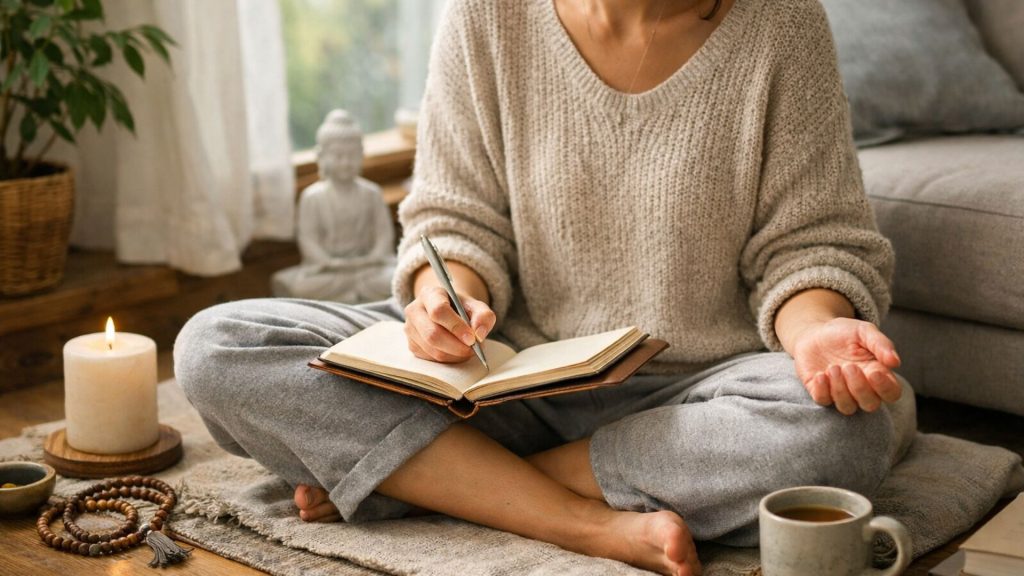
One way to incorporate mindfulness into your daily life is by creating daily spiritual self-care rituals. This can include practices such as meditation, yoga, journaling, or spending time in nature. These rituals can help you connect with your inner self, reduce stress, and promote a sense of peace and calm.
Another way to incorporate mindfulness into your life is by creating a serene meditation corner in your home. This can be a space where you can practice meditation, yoga, or simply relax and unwind. You can add elements such as candles, plants, or comfortable cushions to create a peaceful and calming environment. By regularly practising mindfulness exercises and creating a peaceful space in your home, you can experience the many benefits of mindfulness and improve your overall well-being.
Mindfulness Exercises for Beginners
If you’re new to mindfulness, incorporating it into your daily routine can seem daunting. But with a little practice, mindfulness can become a natural part of your everyday life. Here are a few exercises to get you started:
Breathing Techniques
Breathing exercises are a great way to begin your mindfulness practice. Start by finding a quiet place to sit or lie down. Close your eyes and focus on your breath. Take a deep breath in through your nose, and exhale slowly through your mouth. Repeat this several times, paying attention to the sensation of the air moving in and out of your body.
Body Scan Meditation
Body scan meditation is a mindfulness exercise that involves paying attention to the sensations in your body. Start by finding a comfortable place to lie down. Close your eyes and focus on your breath. Begin to scan your body, starting at the top of your head and moving down to your toes. Pay attention to any sensations you feel, such as tightness, tingling, or warmth.
Mindful Movement
Mindful movement is a great way to incorporate mindfulness into your daily routine. This can be as simple as taking a walk and paying attention to your surroundings. As you walk, focus on the sensation of your feet hitting the ground, the sound of the birds, and the feeling of the sun on your skin. You can also try yoga or tai chi, which are both great ways to practice mindfulness while moving your body.
Remember, mindfulness is about being present in the moment and paying attention to your thoughts, feelings, and sensations without judgment. With practice, you can incorporate mindfulness into your daily routine and reap the benefits of reduced stress and anxiety.
Incorporating Mindfulness into Daily Life
Incorporating mindfulness into your daily life can help you reduce stress, increase focus, and improve overall well-being. Here are a few ways to incorporate mindfulness into your daily routine:
Creating a Morning Routine
Starting your day with a mindful morning routine can help set the tone for the rest of the day. Consider waking up a few minutes earlier to practice mindfulness exercises such as meditation, yoga, or breathing exercises. You can also try practising gratitude by writing down a few things you are grateful for each morning.
Mindful Eating Practices
Eating mindfully can help you enjoy your food more, reduce overeating, and improve digestion. To eat mindfully, pay attention to the smell, taste, and texture of your food. Chew slowly and savour each bite. Avoid distractions such as television or your phone while eating.
Using Mindfulness Apps
Mindfulness apps can be a helpful tool to incorporate mindfulness into your daily routine. Apps such as Headspace, Calm, and Insight Timer offer guided meditations, breathing exercises, and other mindfulness exercises that you can practice anytime, anywhere.
Incorporating mindfulness into your daily life doesn’t have to be complicated. By making small changes to your daily routine, such as creating a morning routine, practising mindful eating, and using mindfulness apps, you can start to experience the benefits of mindfulness-based stress reduction and mindful presence.
Designing a Meditation Space
When it comes to incorporating mindfulness into your everyday life, having a serene meditation space can be a helpful tool. Designing a meditation space can be a fun and creative process that allows you to create a space that is uniquely yours. Here are some tips for designing a meditation space that will help you relax and find inner calm.
Selecting Meditation Cushions
The first step in designing a meditation space is to select the right meditation cushion. The best meditation cushions are those that are comfortable and provide adequate support for your back and hips. There are many different types of meditation cushions available, including zafus, zabutons, and crescent-shaped cushions. Zafus are typically round cushions that provide support for your hips, while zabutons are flat cushions that provide cushioning for your knees and ankles. Crescent-shaped cushions are designed to provide support for your back.
When selecting a meditation cushion, it’s important to consider your individual needs. If you have back pain, for example, you may want to choose a cushion that provides extra support for your back. If you have knee or ankle pain, you may want to choose a cushion that provides extra cushioning for your knees and ankles.
Setting Up a Serene Corner
Once you have selected the right meditation cushion, the next step is to set up a serene corner in your home. This can be any space that is quiet and free from distractions. You may want to choose a corner of your bedroom, living room, or even a spare room in your home.
When setting up your meditation space, it’s important to create a calming atmosphere. You may want to add some plants, candles, or other decorative items that help create a peaceful ambience. You may also want to consider adding some soft lighting, such as a Himalayan salt lamp or a string of fairy lights.
In addition to creating a calming atmosphere, it’s also important to make sure that your meditation space is free from distractions. This means turning off your phone, television, and any other electronic devices that may disrupt your meditation practice.
By following these tips for designing a meditation space, you can create a space that allows you to relax, find inner calm, and incorporate mindfulness into your everyday life.
Harnessing Positive Energies
Incorporating mindfulness into your daily routine can help you harness positive energies and bring more peace and happiness into your life. Here are some tips to help you get started.
Crafting a Vision Board
Creating a vision board is a powerful tool for manifesting your dreams and goals. To create a vision board, start by gathering images and words that inspire you. You can cut these out of magazines or print them from the internet. Then, arrange them on a board or piece of paper in a way that feels meaningful to you. Hang your vision board in a place where you will see it every day, and take a few moments each day to visualize yourself achieving your goals.
Understanding the Law of Attraction
The Law of Attraction is the belief that like attracts like, and that you can manifest your desires by focusing on positive thoughts and feelings. To harness the power of the Law of Attraction, start by setting clear intentions for what you want to manifest. Then, focus on positive thoughts and feelings related to your desires. Visualize yourself already having what you want, and feel gratitude for it as if it has already come true.
Remember that the Law of Attraction is not about magical thinking or wishful dreaming. It is about taking action towards your goals and believing that you can achieve them. When you combine positive thinking with consistent action, you can manifest your dreams and create a life that you love.
Incorporating these practices into your daily routine can help you cultivate gratitude, happiness, compassion, trust, and patience. By focusing on positive energies and taking consistent action towards your goals, you can create a life that is filled with joy and fulfilment.
Frequently Asked Questions
What are some simple mindfulness exercises suitable for beginners?
If you are new to mindfulness, starting with simple exercises is a great way to ease into the practice. One of the easiest mindfulness exercises is to focus on your breath. Sit in a comfortable position and take deep breaths, paying attention to the sensation of your breath moving in and out of your body. Another simple exercise is to practice mindful walking, which involves walking slowly and deliberately while focusing on the sensations in your feet and legs.
How can mindfulness be integrated into daily life activities?
Mindfulness can be integrated into daily life activities in many ways. For example, you can practice mindfulness while doing household chores, such as washing dishes or folding laundry, by focusing on the sensations and movements involved in the task. Another way to incorporate mindfulness into daily life is to take short mindfulness breaks throughout the day. Set a timer for a few minutes and focus on your breath or the sensations in your body during that time.
What are effective daily spiritual self-care practices?
Effective daily spiritual self-care practices vary from person to person, but some common practices include meditation, prayer, journaling, and spending time in nature. These practices can help you connect with your inner self and create a sense of peace and calm in your daily life. Experiment with different practices to find what resonates with you.
What are the steps to create a calming meditation space at home?
Creating a calming meditation space at home can be a simple process. Find a quiet, clutter-free area in your home and decorate it with calming elements such as candles, plants, and soft lighting. Choose a comfortable cushion or chair to sit on during your practice. You can also add personal touches such as photos or artwork to make the space feel more inviting.
Which meditation cushions are recommended for enhancing practice?
The best meditation cushion for you depends on your personal preferences and needs. Some popular options include zafu cushions, which are round and provide support for the hips, and zabuton cushions, which are rectangular and provide cushioning for the knees and ankles. Look for cushions made with high-quality materials and choose a size and shape that feels comfortable for you.
What are the best practices for creating an impactful vision board?
To create an impactful vision board, start by setting clear intentions and goals for what you want to manifest in your life. Choose images and words that resonate with those intentions and arrange them in a way that feels visually appealing to you. Display your vision board in a prominent place where you will see it often, and take time to reflect on your goals and intentions regularly.